
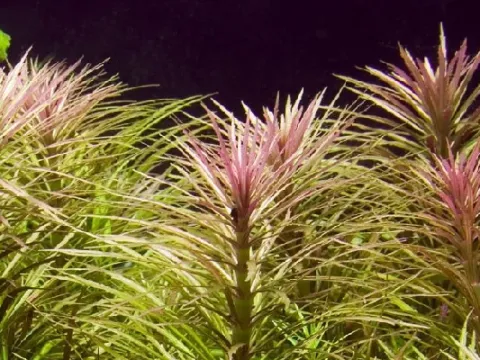
Pogostemon crassicaulis
Pogostemon crassicaulis
Pogostemon crassicaulis is a distinct aquatic plant belonging to the Lamiaceae family. It is widely recognized for its thick, sturdy stems and attractive needle-like foliage, originating from the wetlands and marshy riverbanks of Southeast Asia.
What the section contains
Pogostemon crassicaulis
The plant demands high light intensity to maintain its characteristic structure and dense growth pattern. Without adequate lighting, the plant tends to stretch towards the surface, losing its compact appearance and vibrant green color.
Cultivation requirements include a water temperature range of 22–28°C and a steady supply of carbon dioxide (CO2). This supplementation is essential for the plant to thrive, as it helps in efficient photosynthesis and rapid development of biomass.
The substrate should be rich in nutrients and fine-grained, allowing the root system to spread effectively. Regular use of root tabs containing essential micronutrients like iron is highly recommended to ensure strong growth and deep leaf coloration.
Maintenance techniques involve periodic pruning of the main stems, which encourages branching and creates a bushy aesthetic. Propagation is primarily achieved through stem cuttings, which can be replanted directly into the substrate.
Algae infestations pose the most significant threat to Pogostemon crassicaulis. Because it requires light-heavy conditions, it is susceptible to algae blooms, which compete for nutrients and block the necessary light reaching the leaf surface.
Nutrient deficiency is another common problem. Specifically, low levels of iron or potassium often manifest as yellowing or browning of the leaves (chlorosis), which impairs the plant's health and aesthetic appeal within the aquascape.
Poor water circulation can lead to the accumulation of waste products around the base of the plant. If the water remains stagnant, the lower sections of the stems may start to decay, leading to localized rot and loss of leaves.
Sudden fluctuations in environmental parameters such as pH levels or water hardness can stress the plant. Such environmental shocks often result in the dropping of foliage, which can take weeks for the plant to recover from.
Finally, physical damage from excessive herbivory by certain snails or large goldfish can destroy the plant's delicate stems. Monitoring the aquarium fauna and ensuring compatibility is a critical part of the plant's long-term management.