
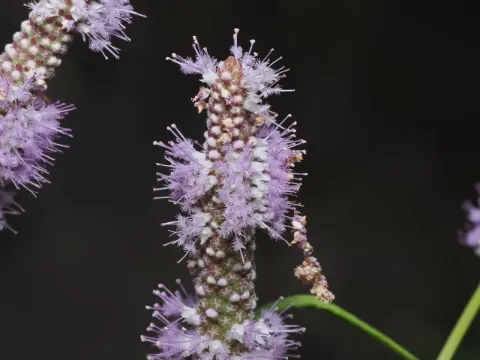
Pogostemon stellatus
Pogostemon stellatus
Pogostemon stellatus is a versatile perennial herbaceous plant belonging to the Lamiaceae family. Originally native to the marshy regions of tropical Asia and Northern Australia, it is currently cultivated as a specialized crop for aquascaping and professional hydroponic systems.
What the section contains
Pogostemon stellatus
Botanically, this species is defined by its distinctive whorled leaves, which form a star-like structure along the stem. Depending on the intensity of light and nutrient availability, the foliage can exhibit a range of colors, from vibrant green to deep shades of pink or purple.
Optimal growth requires high light intensity, ideally around 0.5 to 1 watt per liter in aquarium settings or high-output LED arrays in greenhouses. The plant thrives in temperatures ranging between 22 and 28 degrees Celsius, requiring a stable tropical climate to maintain peak physiological performance.
Soil and water parameters are critical: the substrate must be rich in micronutrients, especially iron, which is vital for pigment synthesis. CO2 supplementation is not optional; consistent carbon dioxide infusion is essential to achieve the species' characteristic dense growth pattern.
Propagation is managed primarily through vegetative cuttings. Agronomists often employ pruning techniques to encourage lateral branching, effectively doubling the harvestable material. Proper spacing is necessary to ensure adequate water flow around each plant unit.
Nutrient deficiency is the primary threat to this crop. A lack of bioavailable iron leads to severe chlorosis, where leaves lose their color and eventually undergo necrosis. This physiological stress makes the plant susceptible to opportunistic secondary infections.
Algal blooms pose a significant risk, particularly when light levels are disproportionate to nutrient levels. Algae can coat the foliage, blocking essential light absorption and leading to the rapid decline of the Pogostemon crop in intensive production environments.
Mechanical damage caused by improper handling during harvesting or transplanting often leads to soft rot. Once the integrity of the stem tissue is compromised, bacterial pathogens can enter, causing rapid systemic tissue collapse in sensitive specimens.
Improper circulation in the hydroponic or aquatic system can lead to local zones of stagnant water. In these areas, organic waste accumulation can trigger the growth of mold or fungus, which may eventually spread to the healthy parts of the plant population.
To maintain plant health, strict water quality management is required. Periodic monitoring of nitrogen, phosphorus, and potassium levels is standard practice to prevent the physiological imbalances that precede almost all pathogenic outbreaks in this species.