
Pogostemon helferi
Pogostemon helferi
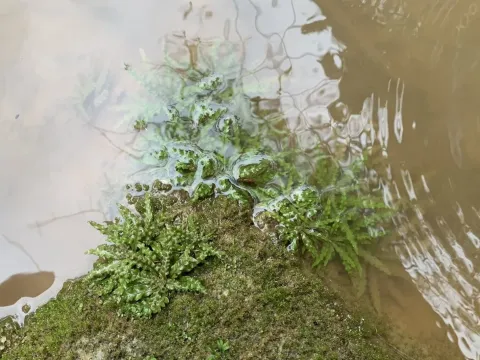
Pogostemon helferi is a distinctive aquatic plant belonging to the Lamiaceae family. It is native to the border region between Thailand and Myanmar, where it grows in the moist soil of riverbanks, often experiencing seasonal flooding.
What the section contains
Pogostemon helferi
This species is renowned for its unique star-shaped appearance and curly, ruffled leaves. Its ability to create dense, vibrant green clusters makes it a top choice for aquascaping the foreground or midground of a freshwater tank.
High light intensity is a fundamental requirement for the success of this crop. Providing at least 0.5 to 1 watt per liter of light ensures the plant remains compact and maintains its characteristic star-like structure without stretching.
The plant is a heavy root feeder, requiring a nutrient-rich substrate to thrive. Supplementing the water column with CO2 and essential micronutrients, particularly iron, is necessary for maintaining optimal health and color.
Temperature range should be maintained between 20°C and 30°C. While it is adaptable to various water parameters, it prefers slightly acidic to neutral water with low to moderate hardness for the best growth results.
Nutrient deficiency is the most common cause of stunted growth in Pogostemon helferi. A lack of essential minerals in the substrate leads to chlorosis, where leaves turn pale or yellow, eventually decaying.
The intricate structure of the leaves makes the plant highly susceptible to algae outbreaks. Once algae settle on the ruffled leaves, it is difficult to remove them without damaging the plant's delicate tissues.
Poor water circulation can result in debris accumulation around the roots, causing decay. This often happens in heavily planted tanks where water flow is obstructed by dense foliage or hardscape elements.
Certain species of herbivorous aquarium snails and fish may target the tender leaves, especially if their preferred food sources are scarce. Protecting young shoots is essential during the initial planting phase.
Regular tank maintenance, including weekly water changes and monitoring nutrient levels, is vital. Keeping the substrate clean and ensuring stable water chemistry helps in preventing pathogen buildup and promoting strong root development.