
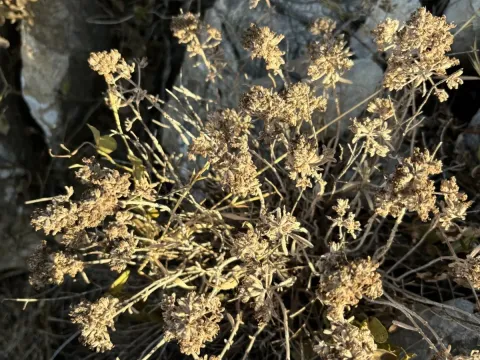
Portuguese germander
Teucrium lusitanicum
Portuguese germander (Teucrium lusitanicum) is a perennial shrub belonging to the Lamiaceae family. It is recognized for its robust growth habits and adaptation to Mediterranean climates, where it plays a role in specialized herbal farming.
What the section contains
Portuguese germander
Native to the Iberian Peninsula, this plant thrives in arid regions and poor soil conditions. It is increasingly studied for its potential in sustainable agriculture as a drought-tolerant, low-input crop suitable for rocky or marginal lands.
The crop requires full sun exposure and well-draining soil to succeed. It is highly sensitive to root saturation; therefore, planting on slopes or elevated beds is recommended to prevent waterlogging and subsequent root decay.
Regarding soil chemistry, the plant performs best in neutral to alkaline, calcareous soils. It requires minimal fertilization, as excessive nitrogen can lead to succulent growth that is more susceptible to frost damage and pest infestation.
Its primary commercial value lies in the essential oil industry and traditional phytotherapy. The plant is harvested for its fragrant foliage, which contains various bioactive secondary metabolites utilized in pharmacological research.
Root rot, primarily caused by excessive moisture and poor soil aeration, remains the most significant threat to Teucrium lusitanicum. Maintaining proper soil structure is essential for long-term survival of the crop.
Pests such as aphids and spider mites can pose a risk during dry, warm spells. These insects damage the foliage, negatively impacting the quality of the raw material collected for essential oil extraction.
Weed management is critical during the establishment phase. Since the plant has a slow initial growth rate, it can easily be outcompeted by aggressive weeds that deprive it of sunlight and essential nutrients.
Prevention of fungal pathogens involves maintaining optimal spacing between rows to ensure adequate air circulation. High-density planting without sufficient ventilation is a primary cause of fungal outbreaks.
Integrated pest management (IPM) strategies, including biological control agents, are preferred over broad-spectrum chemicals. This approach ensures the harvest remains compliant with quality standards for medical and cosmetic applications.