
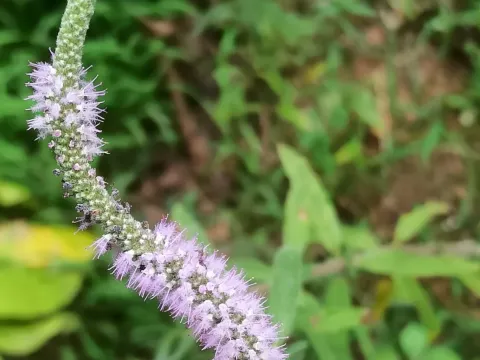
Pogostemon quadrifolius
Pogostemon quadrifolius
Pogostemon quadrifolius is an interesting perennial herb belonging to the Lamiaceae family. To ensure a successful start, seeds should be sown in a high-quality, lightweight seed-starting mix in late winter, providing ample light for germination.
What the section contains
Pogostemon quadrifolius
The seeds are small and should be sown on the surface of the soil rather than buried deeply. Maintaining a consistent temperature of around 20-25 degrees Celsius is crucial for the germination process to succeed within the expected timeframe.
Once the seedlings develop their first true leaves, they can be transplanted into larger containers or prepared field plots. Planting in the field should only occur once all danger of frost has passed, as this species is native to tropical environments.
Propagation via stem cuttings is a common and efficient method for large-scale production. Cuttings should be taken from healthy, non-flowering shoots and rooted in a moist medium to ensure rapid root system development.
Spacing is essential for the long-term health of the crop. Providing enough space between plants helps reduce competition for nutrients and ensures that every individual plant receives sufficient airflow and sunlight throughout the season.
This plant thrives in warm, tropical, or subtropical climates. It is highly sensitive to cold, and exposure to temperatures near or below freezing can cause severe damage or death to the root system of established plants.
Soil requirements include well-draining, fertile loams with a slightly acidic to neutral pH level. Proper drainage is the most critical factor, as Pogostemon quadrifolius is very susceptible to root rot in waterlogged conditions.
Regular irrigation is necessary to keep the soil consistently moist but never saturated. In outdoor cultivation, drip irrigation systems are preferred to prevent water from splashing onto the foliage, which can encourage fungal growth.
Fertilization should focus on balanced NPK applications during the active growing season. Adding organic matter, such as well-rotted compost, to the soil before planting provides a slow-release source of nutrients that supports robust vegetative growth.
Light levels should be high, although plants may require some protection from intense afternoon sun in extremely hot regions to prevent leaf scorching. Maintaining proper humidity levels is also beneficial for the plant's overall vitality.
The economic yield of Pogostemon quadrifolius is focused on the biomass of its leaves and young stems. The plant's ability to produce essential oils makes it a valuable crop for the fragrance and pharmaceutical industries.
Yield performance is highly dependent on effective crop management, including regular weeding and adequate nutrient supply. Well-managed fields can produce multiple harvests per growing season, allowing for significant overall output.
To maximize biomass, farmers often implement pruning techniques to encourage branching. Increasing the number of branches results in a higher density of foliage, which is where the aromatic compounds are primarily concentrated.
Yield estimation is often based on the weight of harvested fresh material, which is subsequently processed for extraction. Maintaining strict quality standards during the harvest process is crucial for achieving high market prices.
Consistent care throughout the life cycle of the crop ensures that the plants remain productive for several years. Older, well-established plants typically offer higher yields and more consistent oil production compared to newly planted ones.
Fungal diseases, especially root rot, are the most significant threats to this crop. Poor drainage or over-irrigation are common causes of these issues, necessitating careful control of soil moisture levels throughout the growing cycle.
Pests such as aphids and spider mites can cause damage by feeding on the sap of the leaves. Infestations should be managed immediately using integrated pest management strategies, focusing on biological controls to protect the oil quality.
Environmental stress, such as extreme temperature fluctuations or strong winds, can also impact plant health. Windbreaks are often used in field settings to protect the plants from physical damage and excessive moisture loss.
Good ventilation is key to preventing the spread of diseases. Planting at appropriate densities ensures that air can circulate freely between the plants, which reduces the buildup of excess humidity in the foliage.
Regular monitoring of the crop allows for early detection of potential threats. Quick intervention, such as removing affected plant parts, can prevent localized issues from turning into widespread infections across the entire field.
Harvesting is typically timed to coincide with the beginning of the flowering stage, which is when the concentration of essential oils in the foliage is at its peak. This timing ensures the highest quality product for end-users.
Mechanical or manual harvesting methods can be used, provided that the cutting tools are kept clean and sharp to minimize damage. Proper cutting techniques support the plant's ability to recover and continue producing growth for the next harvest.
Post-harvest handling is critical to preserve the plant's aromatic properties. Material should be transported and processed quickly to prevent fermentation or the loss of volatile compounds due to heat and light exposure.
Drying the harvested material is the first step of processing. It must be conducted in a well-ventilated, shaded environment at controlled temperatures to avoid degrading the delicate oil components found in the plant tissues.
Once dried, the crop is stored in cool, dry conditions to maintain its aromatic integrity. Packaging materials should be designed to protect the harvest from moisture and light, which are the primary enemies of long-term storage quality.