
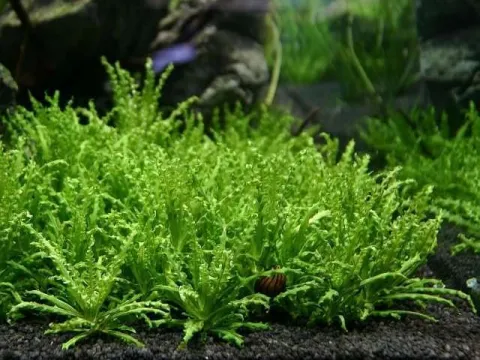
Pogostemon globulosus
Pogostemon globulosus
Pogostemon globulosus is a delicate aquatic plant belonging to the Lamiaceae family. Native to tropical Southeast Asia, it thrives in environments that mimic natural soft-water streams and wetlands, making it a highly specialized crop for aquatic plant enthusiasts.
What the section contains
Pogostemon globulosus
The plant requires precise conditions to flourish. Ideal water parameters include a pH range of 6.0 to 7.0 and soft water with low carbonate hardness. Temperatures should be consistently maintained between 22°C and 26°C to avoid physiological stress.
High light intensity is fundamental for the health of Pogostemon globulosus. Strong lighting, complemented by an appropriate spectral balance, is necessary to maintain its signature compact growth habit and vibrant green coloration.
The substrate must be nutrient-rich and porous. Using professional-grade aquatic soil ensures that the root system receives sufficient oxygen and essential macro-nutrients, which are critical for the plant's structural integrity.
Carbon dioxide (CO2) supplementation is essential. Regular injection of CO2 is required to maximize photosynthesis and growth rates, as this plant is significantly more productive when supplied with dissolved inorganic carbon.
Algae infestations represent the primary threat to the stability of a Pogostemon globulosus crop. Filamentous algae compete for space and light, often suffocating the plant if the biological balance in the system is not strictly managed.
Nutrient imbalances, particularly concerning nitrogen and phosphate levels, can lead to stunted growth and leaf decay. If the chemical composition of the water deviates from recommended levels, the plant's ability to resist pathogens drops significantly.
Stem rot is a frequent condition caused by anaerobic substrate conditions. Poor circulation at the root level facilitates the buildup of toxic byproducts that directly harm the vascular system of the plant.
Biological pests, while less common in sterile environments, can be introduced through contaminated equipment. These pests may cause mechanical damage to the stems, creating entry points for secondary bacterial infections.
Effective management requires a proactive approach, including regular water testing, routine trimming to improve water flow, and the implementation of strong filtration systems to minimize organic waste accumulation.