
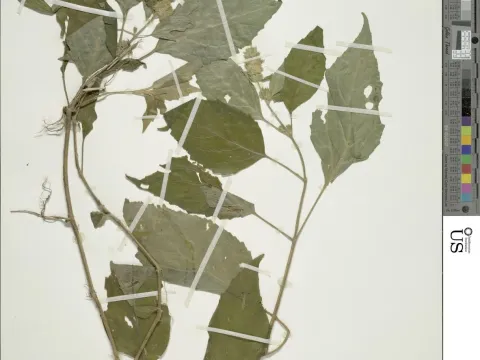
Pogostemon championii
Pogostemon championii
Pogostemon championii is a tropical perennial that requires specific climate conditions, often necessitating greenhouse propagation in temperate agricultural zones.
What the section contains
Pogostemon championii
Seeds should be sown in high-quality starter substrate in late winter to ensure they are well-established before the transplanting season begins.
Germination requires consistent warmth and moderate moisture levels, making climate-controlled environments ideal for the initial development phase.
Transplanting into the field must only occur once the risk of frost has entirely passed and soil temperatures have reached optimal levels for root expansion.
Strategic row spacing is essential to ensure adequate airflow and prevent the development of moisture-related diseases during the intensive growth stage.
As a member of the Lamiaceae family, this crop thrives in well-draining, nutrient-rich soil with a slightly acidic to neutral pH balance.
Adequate water management is crucial; the plant requires consistent moisture but is highly susceptible to root decay if water logging occurs.
The plant prefers partial shade or dappled sunlight, which mimics its natural habitat and protects the sensitive foliage from scorching.
Nutrient supplementation should be based on soil testing, focusing on providing balanced NPK levels to encourage robust vegetative growth.
Regular monitoring of soil moisture levels and aeration is required to keep the plant in a state of continuous, healthy development throughout the season.
Yield production in Pogostemon championii is significantly influenced by the frequency of pruning, which stimulates secondary branching and density.
Under professional management, the crop is capable of producing multiple harvests per season if the plant is allowed sufficient recovery time between cuts.
The total yield is measured by the quality and weight of the harvested foliage, which contains valuable aromatic compounds for industrial extraction.
Crop management practices must focus on minimizing plant stress to ensure the highest accumulation of essential oils within the leaf tissue.
Consistency in harvest timing allows farmers to maintain a uniform product profile, which is highly valued in botanical and perfume markets.
The primary threats to this culture are fungal pathogens, specifically those causing root rot and leaf spot under high humidity conditions.
Pests such as spider mites and aphids are common challenges, frequently colonizing the underside of the leaves if environmental conditions are dry.
Integrated Pest Management (IPM) strategies are recommended, utilizing beneficial insects and organic fungicides to maintain crop health.
Crowding plants leads to poor air circulation, which is a major precursor to disease outbreaks within commercial greenhouse or field settings.
Early detection is vital; regular field scouting allows for the immediate implementation of control measures before pest or disease populations spike.
Harvesting should occur when the aromatic profile is at its peak, typically signaled by the onset of early flowering stages in the plant.
Manual or mechanical harvesting must be performed with clean, sharp tools to minimize physical damage to the plant and promote faster regrowth.
Post-harvest handling requires rapid transfer to shaded, ventilated drying areas to prevent degradation of delicate aromatic oils due to heat.
Drying temperatures must be carefully regulated; excessive heat will result in the loss of volatile compounds and lower the value of the final product.
Proper storage in moisture-proof, light-protected containers is necessary to preserve the quality of the harvested materials for long-term supply chains.