
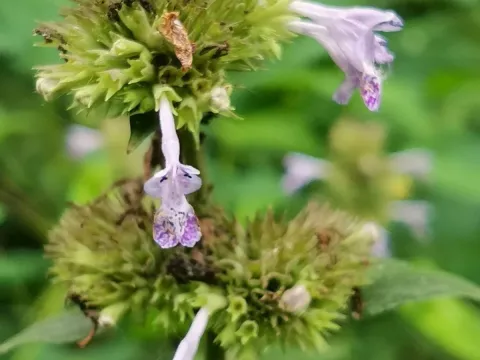
Nepeta manchuriensis
Nepeta manchuriensis
Nepeta manchuriensis, a member of the Lamiaceae family, is a perennial herb valued for its medicinal properties and ornamental value in gardens.
What the section contains
Nepeta manchuriensis
Sowing typically takes place in early spring after the soil has warmed up, or late autumn to allow for natural stratification of the seeds during winter.
Seeds are small and should be sown at a shallow depth of approximately 0.5 to 1 cm. Keeping the seedbed consistently moist is vital for high germination rates.
When grown in rows, spacing should be set at 45-60 cm to allow for adequate airflow and to prevent competition for nutrients between individual plants.
Vegetative propagation via root division is also a highly effective method, usually performed in early spring or late August for better establishment.
This plant thrives in full sun but can tolerate partial shade, though sunlight is essential for optimal essential oil production in the leaves.
Well-drained, sandy-loam soil with a neutral pH is ideal. Avoid heavy clay soils that retain excess water, as this can lead to root rot in colder climates.
Nepeta manchuriensis is known for its cold hardiness and drought tolerance, making it an excellent candidate for low-maintenance landscaping and commercial herb production.
Organic matter in the form of compost or well-rotted manure should be incorporated into the soil before planting to provide slow-release nutrients.
Regular weeding during the establishment phase is critical, as young plants are easily outcompeted by aggressive weeds until they are fully established.
The yield of green biomass depends heavily on soil fertility and the frequency of harvests during the growing season.
Commercial plantations can achieve significant harvests by implementing a two-cut system, where the first harvest occurs during peak flowering.
A second, smaller harvest can often be collected in late summer, provided the plants are well-watered and have sufficient nutrients after the first cut.
Proper harvesting techniques ensure that the root system remains vigorous, allowing the same planting to remain productive for several years.
For high-quality extraction, processing the harvested material immediately is recommended to preserve the integrity of the plant's essential oils.
While relatively robust, the plant is susceptible to powdery mildew, especially during seasons characterized by high humidity and poor ventilation.
Aphids can be a common pest, particularly during the spring growth flush, and should be monitored to prevent stunted growth and leaf curling.
Root rot is the most serious threat, typically resulting from waterlogged soil or excessive irrigation, which damages the root health.
Maintaining proper spacing between plants is the most effective cultural control method to reduce the incidence of fungal and bacterial infections.
- Ensure good soil drainage.
- Promote air circulation.
- Practice crop rotation.
- Monitor for aphid infestations.
- Remove debris from the area in late autumn.
Harvesting should be done on a dry day, ideally after the morning dew has evaporated, to prevent mold development during the drying process.
The stems should be cut 10-15 cm above ground level, which allows the plant to recover and produce a secondary flush of growth for a potential second harvest.
Once harvested, the material must be dried in a shaded, well-ventilated area to protect the aromatic compounds from degradation by direct sunlight.
Controlled low-temperature drying is preferred to maintain the chemical profile of the plant, ensuring it meets medicinal quality standards.
After thorough drying, the herb should be stored in airtight containers away from heat and light to maximize its shelf life and potency.