
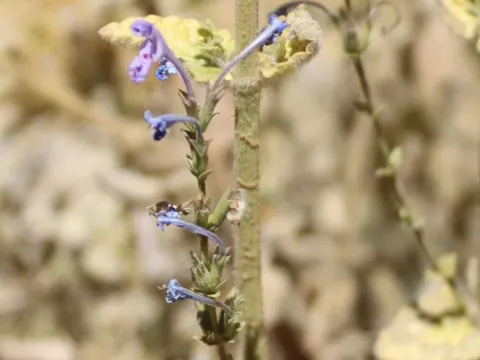
Nepeta glomerata
Nepeta glomerata
Nepeta glomerata, a member of the Lamiaceae family, is a perennial herbaceous plant. Its seeds are small, requiring careful planting depth of about 0.5 to 1 cm to ensure successful germination without burying them too deep.
What the section contains
Nepeta glomerata
The ideal time for sowing is early spring once the soil temperature reaches 8-10°C, or late autumn for winter dormancy. Spring sowing typically results in better emergence rates under controlled moisture conditions.
In commercial agriculture, transplanting seedlings is often preferred over direct seeding. This method ensures uniform stand establishment and reduces seed waste, leading to a more consistent crop density across the field.
The planting pattern should account for the plant's mature size. Rows should be spaced 45–60 cm apart to allow for effective mechanical weeding and inter-row cultivation during the growing season.
Controlling perennial weeds before planting is crucial. In the first year, Nepeta glomerata grows relatively slowly, meaning it can easily be outcompeted by aggressive weeds if the field is not well-prepared.
Nepeta glomerata thrives in sunny locations. It is a light-demanding plant, and maximum essential oil synthesis occurs when it is cultivated in open fields with full solar exposure.
Regarding soil preferences, it prefers well-drained, light loamy or sandy soils with a neutral or slightly alkaline pH. Excessive moisture or poor drainage is detrimental and can cause root decay.
The species exhibits good drought tolerance once established, making it suitable for regions with variable rainfall. However, supplemental irrigation is recommended for optimal biomass production.
The plant is hardy and well-adapted to temperate climates. It typically overwinters successfully in the field, requiring no special protection against cold temperatures during the dormant season.
Choosing fields with good drainage is essential. Avoid planting in low-lying areas where water tends to pool, as stagnant water increases the risk of fungal infections in the root system.
Yields of aerial biomass are most stable during the second and third years of cultivation. During this period, the plants reach full maturity and peak growth capacity.
Average dry mass yields typically range from 15 to 25 centners per hectare, depending heavily on soil fertility, water management, and the specific agricultural practices employed.
The essential oil content is a primary value factor. Nepeta glomerata is harvested commercially to extract these oils, which are highly valued in the pharmaceutical and fragrance industries.
Seed harvesting requires precision due to uneven ripening across the inflorescences. Selective harvesting or specialized equipment is often used to minimize losses from seed shedding.
As a prolific nectar producer, Nepeta glomerata also serves as an excellent honey plant. Increased pollinator activity in the fields can improve seed set and overall stand health.
The primary threats include fungal diseases like powdery mildew, which often develops in overly dense stands or under conditions of high atmospheric humidity.
Pests such as aphids and leaf beetles can cause significant damage to foliage and flower buds, negatively impacting both the biomass yield and the quality of the raw material.
Effective prevention strategies include rotating crops and removing plant debris after the harvest season to disrupt the life cycles of common field pathogens.
Chemical intervention should be used sparingly, especially if the crop is intended for medicinal use or as a forage source for bees, which are sensitive to many insecticides.
Integrated Pest Management (IPM) practices, focusing on early detection and biological control methods, are highly recommended to maintain healthy crop yields.
The primary harvest for biomass occurs during the peak flowering phase, as this is when the concentration of essential oils in the leaves and flowering tops is highest.
Mowers should be set to cut at a height of 10–12 cm above the ground. This preserves the root crown, allowing the plant to regenerate and provide a secondary flush of growth.
Once harvested, the material should be transported immediately to a drying facility to prevent spontaneous heating and the subsequent loss of volatile essential oil compounds.
Drying should be conducted in shaded, well-ventilated areas or in specialized dryers at temperatures not exceeding 40°C to preserve the plant's delicate aromatic profile.
After drying, the raw material must be stored in airtight containers or moisture-proof bags in a cool, dark location to ensure the longevity of the final product.