
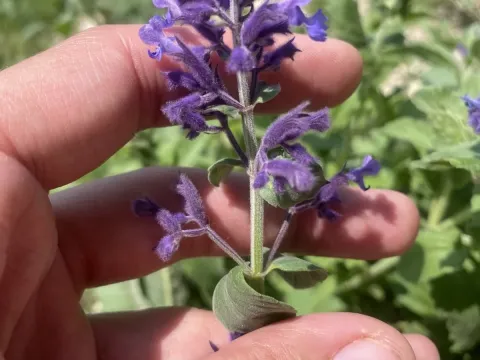
Nepeta cyanea
Nepeta cyanea
Nepeta cyanea is a perennial aromatic plant belonging to the Lamiaceae family. In industrial farming, sowing is performed primarily in the spring once soil temperatures reach 8-10 degrees Celsius, or in late autumn for winter stratification of the seeds.
What the section contains
Nepeta cyanea
Since the seeds are quite small, they should be planted at a shallow depth of 1-1.5 centimeters to ensure optimal germination. Establishing good contact between the seeds and the damp soil is critical, so the field should be rolled immediately after planting.
Recommended row spacing ranges from 45 to 60 centimeters. This provides enough room for mechanical cultivation and weed control, while ensuring adequate airflow between the rows to prevent the development of fungal diseases.
The seeding rate is approximately 3–5 kilograms per hectare. Achieving a uniform distribution is essential for a consistent stand, with seedlings typically emerging within 12–15 days under favorable conditions.
During the first year, the crop focuses on root development and rosette formation. It is important to keep the field clean of weeds during this establishment phase, as the plant grows slowly until it fully matures in subsequent years.
Nepeta cyanea is a sun-loving plant that requires full exposure to sunlight for maximum aromatic oil production. Fields should be situated in open areas without obstruction from trees or structures, as shade leads to poor plant vigor.
The plant has a deep, well-developed root system, making it relatively drought-tolerant. However, for industrial yields, supplemental irrigation during peak vegetative growth is highly recommended to improve overall crop performance.
Soil requirements include well-drained sandy loams or chernozems. The plant is highly sensitive to waterlogging, which can cause root rot and rapid crop failure, so selecting a field with good drainage is a primary agronomic concern.
A neutral to slightly alkaline soil pH (6.5–7.5) is ideal for this crop. Acidic soils should be treated with lime before planting to create a more hospitable environment for the plants to thrive.
The crop exhibits good cold tolerance, allowing it to survive harsh winters in most temperate regions. Protecting the field from strong winds is beneficial, especially during the early spring growth phase when the plant is most vulnerable.
The average yield of fresh green mass for Nepeta cyanea typically ranges from 10 to 20 tons per hectare. This value depends heavily on soil fertility, moisture availability, and the precision of cultivation practices.
Essential oil content in dry mass varies between 0.5% and 1.2%. Concentrations peak during full bloom, and farmers should plan their harvest schedules based on chemical analysis to maximize the quality of the final essential oil product.
Intensive farming methods, including optimized irrigation and balanced mineral fertilization, can boost yields by 20-30%. Regular inter-row cultivation is also necessary to maintain soil moisture and minimize competition from weeds.
A established plantation can remain productive for 5 to 7 years. Over time, yields naturally decline as the plants age, necessitating a field rotation or replanting cycle to maintain high levels of production.
Processing efficiency is a key factor in yield value. After harvesting, the green mass must be dried promptly at temperatures below 40 degrees Celsius to prevent the evaporation of volatile oils and maintain the medicinal quality of the plant.
Powdery mildew is the most common disease for Nepeta cyanea, especially in fields with high humidity or poor aeration. Prevention through proper spacing and field sanitation is the most effective management strategy.
Root rot occurs in poorly drained or waterlogged soils. Avoiding low-lying, wet parts of the field is crucial. Proper site selection and water management are the primary defenses against these soil-borne pathogens.
Aphids are the most frequent insect pest, attacking young shoots and inflorescence tips. In herbal production, it is recommended to use biological pest control methods or selective treatments that adhere to organic certification standards.
Weevils can occasionally cause damage by feeding on leaves during the rosette stage. Regular field scouting is necessary to detect outbreaks early, allowing for targeted local treatments rather than broad-spectrum chemical application.
Weed pressure is the primary threat during the initial establishment year. Because the plants grow slowly at first, mechanical weed control is essential to prevent the crop from being choked out before it reaches full density.
Harvesting is performed during the full flowering stage, which ensures the highest possible concentration of active aromatic compounds in the flower heads and upper foliage of the plants.
Specialized herb harvesters are used to cut the plants at a height of 10-15 centimeters. Leaving this stubble is important for the plant’s health, as it promotes regrowth and ensures strong performance in the following season.
The optimal time for harvest is early morning, after the morning dew has dried but before the sun is at its peak. This timing helps maintain the volatile oil integrity, which can be lost under intense midday heat.
Post-harvest logistics are vital. The cut material must be transported to drying facilities within a few hours to prevent self-heating in transport containers, which degrades the essential oils and lowers market quality.
For seed production, harvesting is delayed until the flower heads turn brown and the seeds reach the wax-ripening stage. In this case, a two-step harvest process—cutting and windrowing followed by threshing—is standard practice.