
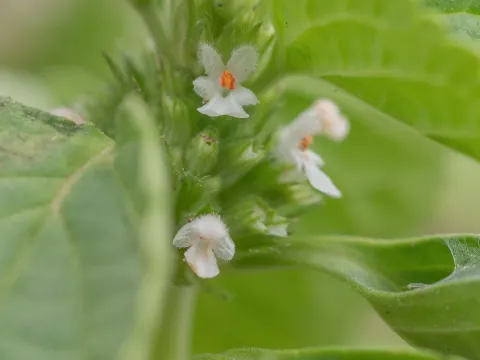
Leucas urticaefolia
Leucas urticaefolia
Leucas urticaefolia is an annual herbaceous plant belonging to the Lamiaceae family. It is known for its distinctive nettle-like leaves, which gives it its specific epithet. This plant is traditionally recognized for its presence in tropical environments across Africa and parts of Asia.
What the section contains
Leucas urticaefolia
The plant thrives in warm, tropical climates and exhibits excellent drought resistance, making it an interesting candidate for cultivation in arid or semi-arid regions. It prefers high-intensity sunlight and is not well-adapted to cloudy or highly humid northern conditions.
Agronomic requirements include well-drained, sandy loam or loamy soils. It performs poorly in heavy, clay-rich soils that retain excess moisture. Proper soil aeration is crucial to prevent root zone hypoxia and subsequent fungal infections, which are the main limiting factors for this crop.
Cultivation practices involve row spacing that allows for adequate airflow. Given its slow initial growth rate, weed control is essential during the early stages of development. Regular inter-row cultivation helps maintain soil structure and promotes healthy root proliferation.
The plant has various economic applications, primarily in traditional medicine where its extracts are utilized for their therapeutic properties. Furthermore, ongoing research explores its potential in industrial aromatherapy and as a source of essential oils, driving agricultural interest.
Fungal pathogens represent the most significant threat to Leucas urticaefolia, particularly under conditions of high soil moisture. Root rot and damping-off disease are common in fields where drainage systems are inadequate or rainfall is excessive during the growing season.
Pest pressure is primarily driven by sap-sucking insects, including aphids and spider mites. These pests concentrate on the young foliage, causing deformation and stunted development, which drastically reduces the biomass and the medicinal quality of the harvest.
Weed competition is a major agronomic challenge. Invasive grasses and broad-leaved weeds can easily outcompete the crop during the first month after germination, leading to significant yield losses if mechanical or manual weeding is neglected.
To mitigate disease risks, farmers are advised to avoid planting in fields previously occupied by other Lamiaceae species to prevent the buildup of soil-borne pathogens. Implementing a balanced crop rotation cycle is recommended for long-term soil health.
Monitoring the fields for signs of viral chlorosis is also advised, as these viruses can be transmitted by insect vectors. Maintaining field hygiene and removing debris at the end of the season significantly reduces the carry-over risk for the following year.