
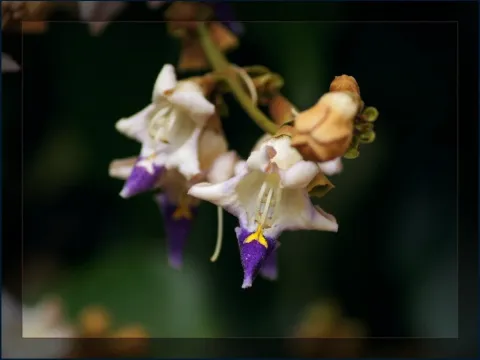
Gmelina
Gmelina
Gmelina is a tropical forest crop, and its commercial propagation typically begins in tree nurseries. The optimal time for sowing seeds coincides with the onset of the rainy season, ensuring natural soil moisture for germination.
What the section contains

Gmelina
The seeds of Gmelina possess high germination energy, though pre-sowing treatments such as stratification or water soaking are often used to ensure uniform sprouting. Prepared seeds are sown in containers or nursery beds.
Transplanting seedlings to the field occurs once they reach a height of 30–50 centimeters. It is crucial to prevent the root system from drying out during transport and planting processes to ensure high survival rates.
Planting density varies based on the intended use of the timber, typically ranging from 1,100 to 2,500 trees per hectare. Denser spacing is favored for pulpwood production, while wider spacing is used for high-quality saw timber.
Regular irrigation in the early growth stages is vital for the establishment of seedlings. During the first two years, Gmelina requires consistent weeding to minimize competition from invasive vegetation.
Gmelina (Gmelina arborea), a member of the Verbenaceae family, is one of the most promising fast-growing species in tropical regions. The tree prefers deep, well-drained, and fertile soils, avoiding areas prone to waterlogging.
The crop is highly light-demanding and does not tolerate heavy shading during its initial development. The optimal temperature range for active growth is between +20 and +35 degrees Celsius, and the tree cannot survive freezing temperatures.
A crucial requirement is an annual rainfall range of 1,500 to 3,000 millimeters. While adult specimens show relative drought tolerance, a stable moisture regime is necessary to form a high-quality, straight trunk.
Soil pH should ideally be within the neutral to slightly acidic range. In extremely acidic or saline soils, Gmelina shows significantly slower growth rates and an increased susceptibility to various diseases.
For intensive plantations, the application of mineral fertilizers, particularly nitrogen and phosphorus, significantly reduces the rotation period. The tree has a strong root system, necessitating loose soil for unrestricted root expansion.
Gmelina is renowned for its extremely rapid growth rate, making it commercially attractive for the forestry sector. Under favorable conditions, plantations can reach harvestable size in just 8–12 years.
The biomass accumulation of this species is among the highest for tropical forest trees. Annual timber yield per hectare can reach 20–30 cubic meters under proper management practices.
Economic uses include the production of lumber, plywood, furniture, and pulp and paper products. Gmelina wood is valued for its light weight, dimensional stability, and excellent workability.
The tree's leaves also serve as quality fodder for livestock due to their high nutritional content. In some regions, agroforestry systems are practiced, integrating Gmelina with seasonal food crops.
Final timber output depends on plantation management, including timely thinning and pruning. Proper agronomy can increase the volume of high-quality saw logs by 15–20 percent.
The primary threat to Gmelina plantations consists of fungal diseases that thrive in high-humidity environments. Root rot and stem decay are the most dangerous, potentially leading to total plantation failure.
Pests, such as defoliating insects and wood borers, can significantly reduce growth rates. Both biological control methods and systemic insecticides are employed during periods of mass infestation to protect the crop.
Weeds are a major competitor for Gmelina in the early years post-planting. Inadequate soil management leads to stunted growth and potentially the need for early plantation decommissioning.
To prevent the spread of diseases, it is recommended to avoid monocultures over large areas and to adhere to mixed-species forestry principles. Phytosanitary monitoring should be conducted on a quarterly basis.
Rodents and large herbivores can damage the bark of young trees, causing necrosis and slowing development. Perimeter fencing is an essential requirement for protecting young saplings from wildlife damage.