
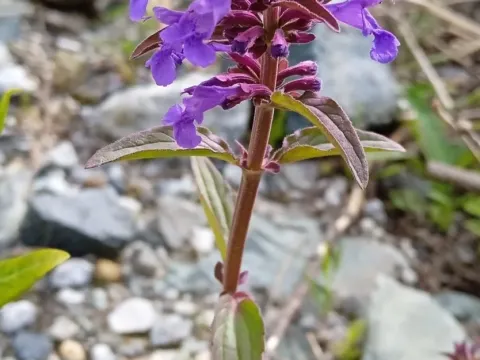
Dracocephalum nutans
Dracocephalum nutans
Dracocephalum nutans is an annual herb belonging to the Lamiaceae family, primarily cultivated for its essential oils and as a high-quality honey plant.
What the section contains
Dracocephalum nutans
Sowing typically takes place in early spring, as soon as the soil reaches a temperature of 5–8 degrees Celsius, which encourages uniform germination.
The seeds should be sown at a shallow depth of 1–2 centimeters to ensure they receive sufficient light and air, which are necessary for proper sprouting.
Row spacing is usually set between 15 and 20 centimeters, depending on the specific objective of the harvest, whether it be biomass or seed production.
Proper field preparation, including shallow tilling and the creation of a fine tilth, is essential for successful establishment of the crop in the field.
This crop thrives in sunny locations, as exposure to direct sunlight is crucial for the accumulation of aromatic compounds within the plant tissues.
Well-drained loamy or sandy soils with a neutral or slightly alkaline pH level are ideal for the development of its root system.
Adequate soil moisture is particularly important during the early stages of development and throughout the transition into the budding phase.
Dracocephalum nutans shows moderate resistance to cold, making it suitable for cultivation in various temperate climates without significant crop damage.
To maximize yields, the application of balanced fertilizers—specifically nitrogen, phosphorus, and potassium—should be based on soil nutrient testing.
The biomass yield of this crop can range from 15 to 25 tons per hectare, depending heavily on soil fertility and the timing of cultivation operations.
As a valuable honey plant, the species is highly prized by beekeepers for its high nectar secretion, which supports healthy bee populations and honey production.
Seed production yields generally range from 5 to 8 quintals per hectare, provided that harvesting is performed at the optimal time to prevent seed shattering.
The concentration of essential oils is at its peak during full bloom, determining the economic value of the harvested biomass for industrial processing.
Systematic management of soil moisture and nutrition directly influences the stability of yields across different growing seasons.
Young seedlings are particularly vulnerable to cruciferous flea beetles, which can cause significant damage to the cotyledons and early leaves.
Powdery mildew represents a common pathological threat, especially in dense plantings or areas with poor air circulation and high humidity.
Root rot diseases are more prevalent in waterlogged soils, highlighting the necessity of effective field drainage systems to maintain crop health.
Competition from weeds is a major challenge during the early stages of growth, requiring mechanical weed control to prevent yield reduction.
Integrated pest management strategies, including crop rotation and the use of approved biocontrol agents, are recommended to maintain healthy stands.
For essential oil extraction, harvesting should be carried out at the peak of full flowering to ensure the highest quality of the final product.
Seed harvesting is conducted when the lower parts of the inflorescences show signs of browning, indicating physiological maturity of the seeds.
Post-harvest processing involves rapid drying in well-ventilated, shaded areas to preserve the volatile compounds and prevent mold development.
Mechanized harvesting tools should be calibrated carefully to reduce seed loss during the cutting and transport phases of the operation.
Proper storage conditions, including cool and dry environments, are essential to maintain the aromatic properties and overall quality of the harvested material.