
Dolomite sage
Salvia dolomitica
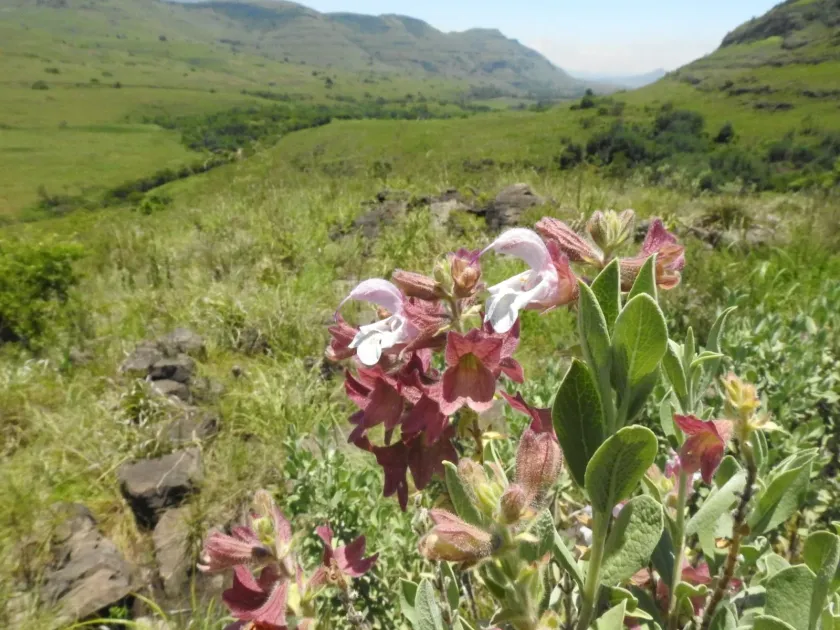
Description
Growing requirements
Dolomite sage (Salvia dolomitica) is a perennial subshrub belonging to the Lamiaceae family. Native to the mountainous regions of South Africa, it naturally inhabits dolomite formations, which dictates its specific soil and drainage preferences.
The plant thrives in full sun exposure and requires highly permeable, well-draining soil to prevent root rot. Its greyish-white foliage is a natural adaptation to intense sunlight and arid conditions, helping to reduce water transpiration.
In agricultural settings, it is best suited for climates with mild winters and dry, warm summers. While it is hardy in many respects, protecting the root zone from excessive moisture during cold periods is vital for survival.
Optimal growth is achieved in alkaline to neutral soil types with low organic matter content, replicating the nutrient-poor conditions of its native rocky habitat.
Due to its ornamental appeal and fragrant leaves, Salvia dolomitica is increasingly studied for its potential in essential oil production and high-end landscape design applications.
Main diseases and pests
The primary threat to dolomite sage is soil waterlogging, which rapidly leads to root system failure and the death of the plant.
Powdery mildew is a common fungal disease that affects the foliage when plants are kept in environments with high humidity and poor air circulation.
Pests like spider mites may become problematic in greenhouse conditions, particularly during hot and dry spells when natural defenses are stressed.
Aphids can occasionally infest new growth; however, the plant’s strong aromatic oils act as a deterrent to many common garden insect pests.
Management of these threats focuses on preventive measures, including proper spacing, regular pruning to improve airflow, and strict control of irrigation schedules.