
Dominican sage
Salvia dominica
Description
Sowing dates
Dominican sage (Salvia dominica) is a perennial herbaceous plant belonging to the Lamiaceae family. It is native to the Middle Eastern regions, where it thrives in Mediterranean-type ecosystems.
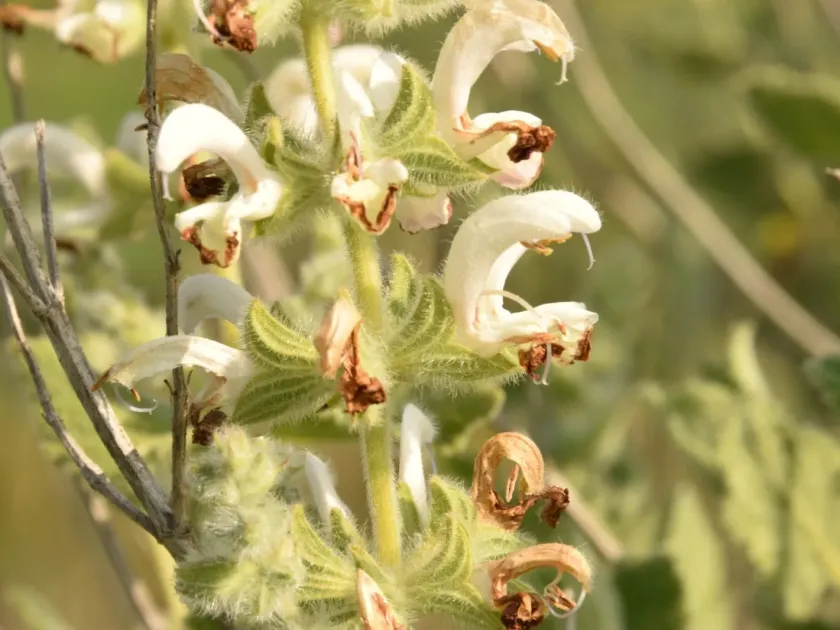
The plant features upright stems, opposite leaves with fine pubescence, and clusters of small flowers that are highly attractive to local pollinators throughout its blooming season.
As a sun-loving species, it requires locations with high solar exposure to ensure optimal development of its secondary metabolites and overall plant health.
Propagation is typically achieved through seeds, which should be sown in early spring once soil temperatures have consistently reached 12–15 degrees Celsius for germination.
In industrial settings, row planting with spacing of up to 60 cm is standard practice, allowing for efficient mechanical weeding and nutrient management across the field.
Growing requirements
Dominican sage thrives in well-drained, slightly alkaline or neutral soils; it is highly sensitive to waterlogging, which can be detrimental to its root system.
The plant demonstrates remarkable drought tolerance, making it an excellent candidate for agricultural production in arid or semi-arid climates with limited water availability.
Proper soil aeration is crucial; hence, sandy or stony substrates are preferred over heavy clays that retain excessive moisture and hinder the root development process.
Fertilization should be applied conservatively, as excessive nitrogen often leads to excessive leaf growth while reducing the concentration of essential oils in the plant tissues.
Establishing the crop in open, breezy areas helps manage microclimate humidity, effectively reducing the risk of fungal pathogens and promoting strong, woody stems.
Yield
The commercial value of Dominican sage lies in its chemical profile, providing raw materials for the pharmaceutical, cosmetic, and traditional herbal medicine industries.
Yields are optimized by maintaining healthy stands for 3–5 years, after which the plot performance may decline, necessitating crop rotation or renewal of the planting stock.
Peak biomass and oil content are achieved during the full flowering stage, which serves as the primary indicator for timing the harvest to maximize return on investment.
Agricultural yields are monitored through dry matter mass per hectare, with consistent care ensuring that essential oil production remains within profitable industrial ranges.
Strategic management of field density and regular field maintenance are key to sustaining high yields and ensuring the longevity of the perennial production cycle.
Main diseases and pests
Fungal diseases, particularly root rots and leaf spots, represent the primary threat to Dominican sage crops, especially when planting density is too high or drainage is poor.
Insects such as aphids and spider mites can infest the foliage during warm periods, requiring careful observation and biological control measures to protect the crop.
Weed control is essential, as invasive species can quickly compete with the sage for water and light, significantly hindering the growth of young, vulnerable seedlings.
Integrated pest management (IPM) practices are highly recommended to control populations of harmful insects without relying on intensive chemical pesticide applications.
Regular inspection of the root zone and canopy ventilation are the most effective non-chemical methods for preventing widespread disease outbreaks in commercial fields.
Harvesting
Harvesting should occur at the peak of the flowering period when the plant's essential oil content and volatile aromatic profile are at their maximum concentration.
Mechanical harvesting equipment is used to cut the plants at a specific height above the crown, ensuring that the plant can regenerate quickly for subsequent cuts.
Immediate post-harvest processing involves drying the plant material in controlled environments with adequate airflow and temperatures below 40 degrees Celsius.
Proper drying prevents the degradation of delicate leaves and the loss of essential aromatic compounds, which is critical for maintaining high commercial quality standards.
After reaching the target moisture content, the dried material should be stored in cool, dark, and dry conditions to ensure long-term shelf stability and potency.