
Downy hemp-nettle
Galeopsis pubescens
Description
Growing requirements
Downy hemp-nettle (Galeopsis pubescens) is a member of the Lamiaceae family. It is an annual herbaceous weed commonly found in cereal fields, arable land, and disturbed soil environments throughout Europe and parts of Asia.
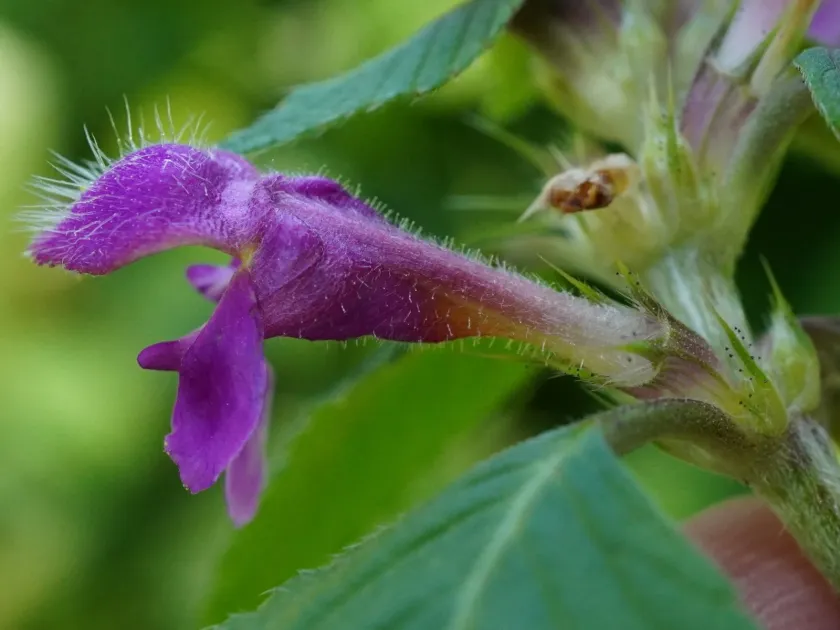
The plant is morphologically distinct, featuring square stems with noticeable swellings below the leaf nodes. These stems are covered in soft, velvety hairs, which gives the plant its common name and helps in field identification.
It thrives in fertile, well-drained loamy or sandy soils with moderate moisture levels. The species exhibits high environmental adaptability, allowing it to occupy various habitats ranging from sunny fields to semi-shaded forest edges.
As a non-crop species, it is considered a persistent agricultural weed. In cropping systems, it competes aggressively with crops for water, light, and soil nutrients, often resulting in reduced crop density and overall yield losses.
Historically, the plant has occasionally been used in traditional herbal medicine, though it holds no current value as an agricultural crop and is treated primarily as a target for eradication in farm management.
Main diseases and pests
The primary agricultural threat posed by Downy hemp-nettle is its rapid growth cycle and high seed production. A single plant can shed thousands of seeds that remain viable in the soil seed bank for several years.
The species serves as an alternative host for various fungal pathogens, such as powdery mildew, which can easily transition to nearby crops. This makes the management of weed clusters near field edges particularly important for disease prevention.
Pests such as aphids and various beetles frequently infest the plant. Its hairy surfaces can act as a barrier to certain contact insecticides, which is why integrated pest management emphasizes systemic chemical approaches for better control.
Management strategies include deep autumn plowing to bury seeds and the implementation of a diverse crop rotation. Mechanical weeding, particularly harrowing and inter-row cultivation, is effective if performed at the seedling stage.
Chemical control focuses on the application of selective post-emergence herbicides. Due to its vigorous regrowth potential, monitoring fields for second-growth flushes after initial spraying is essential for long-term farm success.