
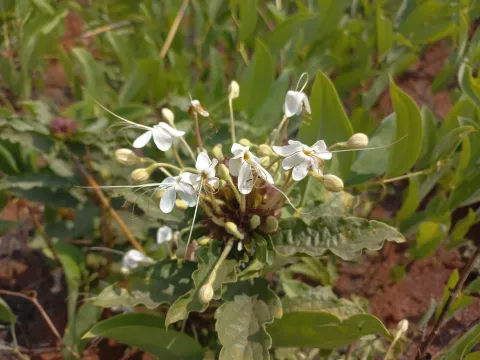
Clerodendrum buchneri
Clerodendrum buchneri
Clerodendrum buchneri is a perennial tropical plant species belonging to the Lamiaceae family. Originally native to the tropical regions of Africa, this plant thrives in humid, shaded forest environments.
What the section contains
Clerodendrum buchneri
Botanically, it is classified as a shrub or subshrub known for its specific leaf morphology and vertical growth habit. The plant is particularly distinguished by its fragrant white flowers, which emerge in elegant clusters during the peak growing season.
Cultivation of this species requires a warm climate with temperatures consistently between 20°C and 25°C. Due to its tropical origins, the plant is not frost-tolerant and must be grown in controlled greenhouse or indoor environments in temperate zones.
The ideal soil for this crop must be well-draining, nutrient-rich, and slightly acidic. It is crucial to maintain high relative humidity levels, which helps the plant maintain its foliage health and encourages vigorous flowering.
In terms of economic and practical use, Clerodendrum buchneri is utilized primarily in ornamental horticulture. It is a popular choice for botanical collections and interior design, valued for its aesthetic appeal and unique floral display.
The primary pests affecting the plant in greenhouse settings include spider mites and mealybugs. Regular inspections are recommended to prevent infestations, as these pests thrive in low-humidity conditions.
Root rot remains the most common pathological threat, typically caused by waterlogged soil and poor drainage systems. Implementing a structured irrigation schedule and ensuring soil aeration are essential practices for effective disease management.