
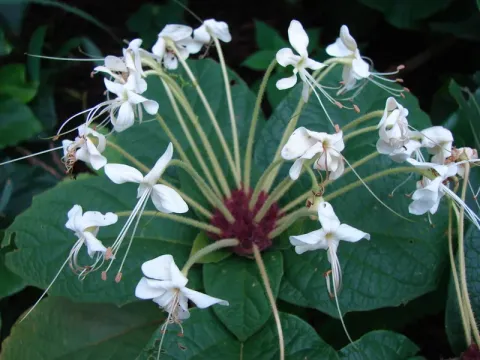
Clerodendrum capitatum
Clerodendrum capitatum
Clerodendrum capitatum is an evergreen shrub species belonging to the Lamiaceae family. Native to tropical regions of Africa, this plant is recognized for its unique, head-like inflorescences and fragrant white flowers.
What the section contains
Clerodendrum capitatum
This crop requires a tropical environment with temperatures consistently ranging between 20°C and 28°C. It is highly sensitive to cold and cannot withstand frost, making it suitable for greenhouses or tropical garden cultivation.
High humidity levels are essential for the healthy development of Clerodendrum capitatum. Regular misting or the use of humidifiers is recommended when growing this plant in indoor conditions to mimic its natural humid climate.
The ideal soil for this plant should be fertile, well-draining, and slightly acidic. A mixture of loam, peat, and sand provides the necessary structure to support root health while preventing water stagnation in the container.
Consistent fertilization is required during the growing season to support its vigorous development. A balanced, water-soluble fertilizer applied every two weeks helps maintain the plant's structural integrity and promotes consistent blooming.
Spider mites are the most common pests affecting Clerodendrum capitatum, especially in environments where air humidity is low. These pests can cause chlorosis and eventually lead to significant leaf drop if left unmanaged.
Mealybugs and scale insects also pose a threat to this plant. These pests feed on the phloem sap, weakening the plant and creating sticky secretions that may encourage the development of sooty mold on the foliage.
Root rot is the primary disease risk, often triggered by overwatering or poor drainage systems. It causes the roots to blacken and decay, preventing the plant from absorbing necessary nutrients and water from the soil.
Effective management involves the use of systemic insecticides for pest control and ensuring proper cultural practices to prevent fungal diseases. Pruning infected branches can help contain the spread of local infestations.
Preventive care is critical, including the quarantine of new plants and regular cleaning of leaves with soft water. Maintaining optimal air circulation around the canopy helps minimize the risk of both pest outbreaks and fungal infections.