
Clerodendrum calamitosum
Clerodendrum calamitosum
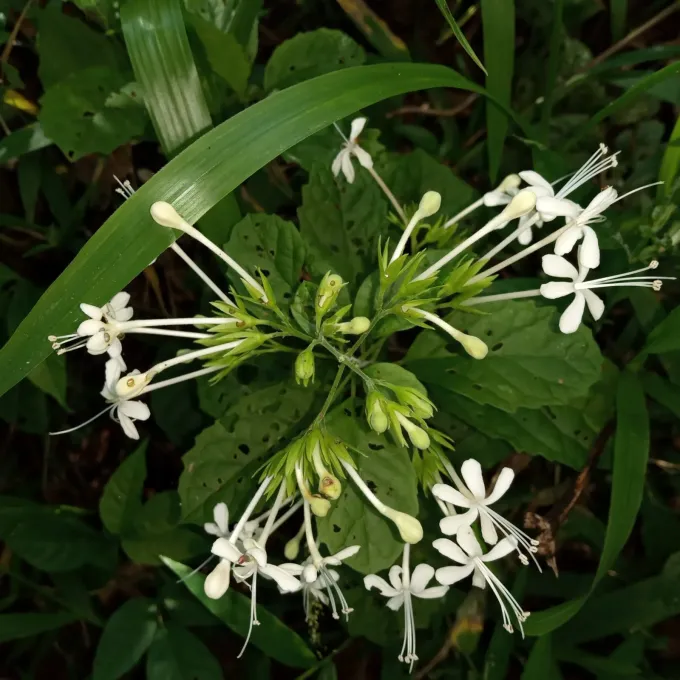
Description
Growing requirements
Clerodendrum calamitosum is a tropical perennial shrub belonging to the Lamiaceae family. Native to the Southeast Asian region, particularly the Philippines and Indonesia, this plant thrives in humid forest environments where temperatures remain warm year-round.
The plant requires bright, indirect sunlight to flourish and maintain its deep green foliage. It is highly sensitive to cold temperatures and must be kept in environments above 15 degrees Celsius to prevent physiological damage and dormancy issues.
Soil requirements focus on well-draining, nutrient-rich potting mixes with a slightly acidic to neutral pH. Maintaining consistent soil moisture is essential, though it is critical to prevent waterlogging by providing a robust drainage layer at the base of containers.
Cultural maintenance includes regular pruning to manage its spreading growth habit and encourage denser flowering. As a tropical species, it significantly benefits from high ambient humidity, often necessitating misting or the use of humidity trays in indoor settings.
In terms of utilization, the plant is primarily cultivated for its ornamental value due to its elegant white, fragrant flowers. Historically, its leaves have been utilized in traditional herbal medicine as a diuretic and anti-inflammatory agent.
Main diseases and pests
Spider mites are the most common pest threat for Clerodendrum calamitosum, especially in drier environments. They feed on the underside of leaves, causing discoloration and eventual leaf drop if left unchecked by appropriate acaricides.
Mealybugs can also infest the plant, settling in the nodes and leaf axils. Infestations are managed through a combination of manual removal and systemic insecticides, ensuring the health and vigor of the specimen is restored.
Root rot, induced by fungal pathogens, represents a major threat in poorly drained or overly damp conditions. Preventive measures include using high-quality potting substrates and ensuring that the plant is never sitting in standing water.
Nutrient imbalances can lead to chlorosis, which manifests as yellowing leaves and reduced flowering capacity. Regular application of a balanced, liquid-soluble fertilizer during the growing season helps mitigate these nutritional deficiencies.
Proper air circulation is crucial for disease prevention in a controlled environment. By maintaining adequate spacing between plants and monitoring for early signs of infestation, growers can effectively protect the crop from significant damage.