
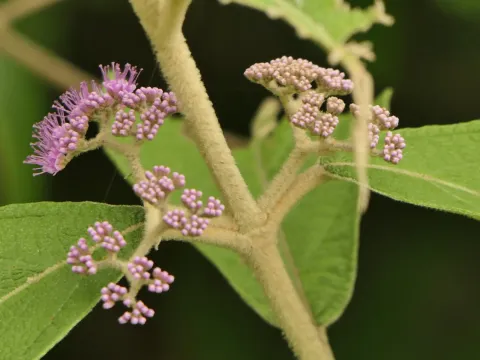
Beautyberry
Callicarpa macrophylla
Callicarpa macrophylla, commonly known as the large-leaved beautyberry, belongs to the Lamiaceae family. It is a deciduous shrub characterized by its large, soft, felted leaves and distinctive arrangement of flowers and berries.
What the section contains
Beautyberry
The plant is native to the Himalayan region and Southeast Asia. It thrives in warm, humid climates, requiring protection from severe frost to maintain healthy vegetative growth during the dormant season.
The ideal soil conditions for this crop include rich, well-draining loam that remains slightly moist. Providing adequate organic matter in the soil profile supports vigorous development of the root system.
It prefers full sun to partial shade locations. Proper exposure to sunlight is crucial for the production of its signature clusters of berries, which are an aesthetic and biological feature of the plant.
Host-plant utility spans ornamental gardening and medicinal research, as extracts from the leaves and berries contain bioactive compounds used in traditional medical practices.
This shrub can be susceptible to various fungal pathogens, such as leaf spot or powdery mildew, particularly in environments with poor air circulation or excessive humidity levels.
Common agricultural pests affecting this species include aphids, whiteflies, and spider mites, which can cause significant stress to young plants and reduce overall plant vigor.
Integrated Pest Management (IPM) strategies, including periodic scouting and the use of insecticidal soaps or horticultural oils, are effective for controlling common pest populations.
Sanitation practices such as removing leaf litter and pruning diseased branches significantly lower the incidence of recurring infections during the growing season.
Maintaining balanced soil nutrition and avoiding overhead irrigation during cooler periods can help reduce the susceptibility of the shrubs to foliage-related ailments.