
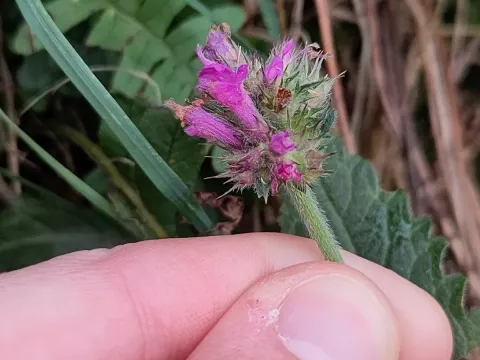
Betony
Betonica L.
Betony (Betonica officinalis) is typically propagated by seeds sown in early spring or late autumn. The soil should be prepared to a fine tilth, ensuring seeds are sown at a shallow depth of approximately 1 to 2 centimeters.
What the section contains

Betony
For optimal germination, seeds require a consistent moisture level. If starting indoors, sowing should occur in late winter to ensure robust transplants are ready for the field once the frost risk has passed.
Planting density is crucial for crop health. A spacing of about 45 to 60 centimeters between rows allows for sufficient aeration, which is essential for reducing the risk of fungal infections in the crop canopy.
Once established, the crop tends to spread slowly via rhizomes. This makes it a reliable perennial, meaning fields do not require annual reseeding, provided the weed control is managed effectively.
In field conditions, the germination phase can take up to three weeks. Protecting the young, slow-growing seedlings from competitive weeds is the most important task for an agronomist during the first weeks of the life cycle.
Betony belongs to the Lamiaceae family and thrives in well-drained, fertile soil rich in organic matter. It prefers a neutral to slightly acidic pH, which supports the full development of its root system.
While the plant is hardy and adapts to various lighting conditions, full sun is generally preferred to maximize the concentration of secondary metabolites, which are essential for its medicinal quality.
Water management is vital. Although it survives short dry spells, consistent irrigation during the peak growing season significantly improves biomass production and overall crop uniformity.
The plant demonstrates good frost resistance, making it suitable for temperate climate zones. It does not require special winter protection in regions with reliable snow cover, which acts as a natural insulator.
The ideal site for cultivation should be free from perennial weeds like couch grass. Clearing the field thoroughly before planting is essential, as mechanical weeding between plants is difficult once the crop has filled out.
Yield levels depend heavily on the maturity of the plants and the fertility management of the soil. Betony reaches its peak productive capacity in the second and third years after planting.
Expected yields for dry herb mass typically range from 1.2 to 2 tonnes per hectare, depending on local soil quality and the precision of the harvest timing. Proper fertilization with organic nutrients is recommended for sustainability.
The cultivation period can span several years on the same plot. After three years, dividing the rhizomes or refreshing the soil fertility may be necessary to maintain high production standards.
Regular cultivation of the inter-row spaces is a proven method to boost yield. By keeping the topsoil loose and aerobic, farmers encourage rapid vegetative growth and reduce water evaporation.
Successful management involves balancing plant density with individual plant vigor. Overcrowded fields often lead to thinner stems and lower quality foliage, which reduces the overall market value of the crop.
The primary threats to Betony are soil-borne pathogens, especially under conditions of excessive soil moisture. Root rot is a significant concern that can quickly destroy entire sections of a planting row.
Pests such as aphids and leaf-eating beetles can cause damage during the early summer months. Integrated pest management strategies, including the use of beneficial insects, are highly recommended over harsh chemicals.
To mitigate disease pressure, it is essential to avoid sites with poor drainage. If a site has been previously affected by root diseases, a crop rotation cycle of at least four years is necessary.
Good field hygiene, including the removal of dead plant material at the end of the season, significantly reduces the overwintering capacity of pests and fungal spores.
Frequent monitoring for leaf spot or powdery mildew is standard practice. Early intervention, such as pruning affected branches or improving site ventilation, is usually sufficient to control these issues.
The harvest should be conducted during the peak flowering stage, which is when the plant's medicinal properties are most concentrated. Harvesting too early or too late results in a lower-quality product.
Using sharp cutting equipment, the above-ground biomass is harvested at about 10 to 15 centimeters above the ground. This preserves the crown and allows the plant to regenerate for future cuts or seasons.
Post-harvest handling is critical for maintaining quality. The harvested material must be moved to a clean, shaded, and well-ventilated drying area immediately to prevent overheating and fermentation.
The drying process should be steady, using temperatures below 40 degrees Celsius. Rapid drying helps lock in the natural color and the essential oil content required by pharmaceutical buyers.
Once dried to a moisture content of roughly 10-12 percent, the herb should be stored in cool, dry, and dark conditions. Proper storage prevents degradation of active ingredients and ensures a long shelf life.