
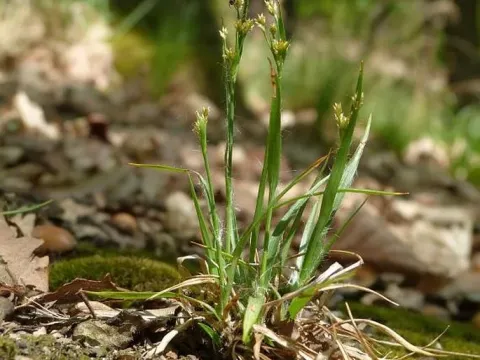
Pale woodrush
Luzula pallescens
Pale woodrush (Luzula pallescens) is a perennial herbaceous plant belonging to the Juncaceae family. It is recognized as a hardy species capable of thriving in varied temperate environments, often found in open forests, meadows, and cleared lands.
What the section contains
Pale woodrush
Botanically, the plant features a tufted growth habit with narrow, flat leaves that are characteristically fringed with long, white hairs. The inflorescence consists of a loose panicle with clusters of small, pale-brown flowers, which bloom in late spring and early summer.
The geographic distribution of Luzula pallescens covers extensive regions across Eurasia. It prefers temperate climates and is highly resilient to cold winters, making it an excellent candidate for inclusion in temperate grassland ecosystems.
Regarding soil and site requirements, this species favors well-drained, slightly acidic to neutral soils. It displays a high level of environmental plasticity, tolerating both moderate moisture and short periods of dry conditions, provided there is adequate light.
In agricultural practice, the pale woodrush is valued as a component of natural pasture mixes. Its early vegetative growth provides essential nutrition for livestock during the early spring season, filling the gap before more robust forage crops mature.
The primary threats to Luzula pallescens include various fungal pathogens such as rust and leaf spot, which typically emerge during periods of prolonged high humidity. Proper field drainage is the most effective preventative measure against these infections.
Insect pests such as grass flies and specialized curculionids can potentially damage the generative structures of the plant. Monitoring of crop health during the flowering phase is recommended to ensure optimal seed development and vigor.
While generally resistant to herbivory-related stressors, excessive grazing pressure during the initial establishment year can hinder root development. Managed grazing rotations are essential to maintain the long-term health and biomass production of the stands.
Competition from more aggressive, invasive grasses can pose a threat to the pale woodrush population in degraded grasslands. Periodic maintenance, such as selective mowing or controlled burning, can help sustain the vigor of the species within a community.
Environmental stress, such as extreme heat and prolonged drought, may increase the susceptibility of the plant to secondary infestations. Maintaining a balanced level of soil fertility and avoiding overcrowding are key strategies for mitigating these risks.