
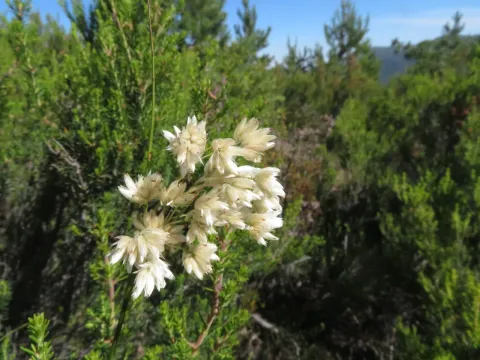
Milk-flowered woodrush
Luzula lactea
Milk-flowered woodrush (Luzula lactea) is a perennial herbaceous plant belonging to the Juncaceae family. It is recognized for its unique, delicate inflorescences that carry a milky-white hue, making it an elegant choice for landscaping and semi-shaded garden beds.
What the section contains
Milk-flowered woodrush
Originating from regions with temperate climates, this species thrives in locations with dappled shade and moderate humidity. It is an ideal plant for woodland gardens where it mimics the natural growth conditions of forest understories or moist meadows.
The cultural requirements involve fertile, well-draining, and slightly acidic soil. While the plant can adapt to various soil types, maintaining a steady level of moisture is crucial to prevent the leaf tips from browning and to ensure lush foliage development.
Climate tolerance is one of the strengths of this species, as it is well-adapted to cooler temperate zones. It performs best when protected from the harsh afternoon sun, which can dehydrate the plant quickly, especially in areas with lower humidity.
Agrotechnical maintenance is relatively straightforward: it consists primarily of cleaning the clumps in early spring to remove withered foliage. Propagation is best achieved through division, which keeps the plant vigorous and maintains its aesthetic appeal year after year.
Luzula lactea is remarkably resistant to many common diseases, but it can be susceptible to root rot if the soil remains waterlogged for extended periods. A proper drainage system is the primary preventative measure to ensure long-term plant health.
Powdery mildew may occur if the planting density is too high, preventing adequate airflow between the plants. Maintaining appropriate spacing is essential to keep the foliage dry and free from fungal spores that thrive in stagnant, humid air.
Slugs and snails can be minor pests, often feeding on the tender leaves during wet weather. Gardeners can manage these pests by using physical barriers or organic traps to protect the attractive green foliage of the woodrush.
Aphid infestations are rarely severe but can occasionally target the developing inflorescences. If detected early, aphids can be controlled through simple mechanical removal or the application of mild, soap-based insecticidal solutions.
By providing the correct environment and following basic hygiene practices in the garden, the milk-flowered woodrush remains a robust and trouble-free perennial that adds significant texture and color to shaded landscapes.