
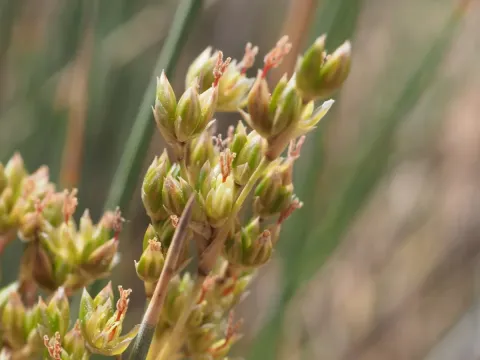
Rigid rush
Juncus rigidus
Rigid rush (Juncus rigidus) is a perennial herbaceous plant belonging to the Juncaceae family. It is well-adapted to saline and wet environments, often found in marshy areas and along the edges of inland water bodies where other crops struggle to thrive.
What the section contains
Rigid rush
The plant exhibits significant ecological plasticity, enabling it to colonize heavy clay soils with high salt content. It thrives in open, sun-exposed locations, as sufficient light intensity is vital for the development of its characteristic stiff and sturdy stems.
Water management is the most critical aspect of its cultivation. The species requires soil moisture to be maintained near saturation point throughout the growing season, though it can tolerate temporary fluctuations in water levels without significant damage.
Climatic requirements for Juncus rigidus center around regions with long, warm growing seasons. It is inherently drought-resistant during dormant phases, but active growth is strictly dependent on the availability of groundwater or high-moisture soil conditions.
Agrotechnical practices involve minimal soil disturbance to protect the rhizome structure. Fertilization is generally unnecessary, as the plant is adapted to nutrient-poor, saline conditions and can compete effectively with invasive weeds in its niche.
The primary economic use of rigid rush involves the exploitation of its durable and flexible stalks. Historically, it has been harvested for basket weaving, crafting traditional floor mats, and creating sustainable packaging materials for local markets.
Harvesting usually takes place in late summer, when the stalks are fully matured and have developed maximum lignin content. This timing ensures that the material provides the necessary structural integrity for the intended craft or industrial use.
The harvesting process is typically manual, requiring careful cutting to avoid damaging the underground rhizome network. This ensures the sustainability of the stand, allowing for annual regrowth without the need for replanting.
Post-harvest, the stems undergo a drying phase in shaded, well-ventilated areas to prevent mold growth and preserve the color and texture. Proper drying is essential to prevent the stalks from becoming brittle and losing their commercial value.
The final product is graded based on stalk length and color consistency. Due to the increasing interest in natural and biodegradable materials, rigid rush is gaining popularity as a sustainable alternative in modern eco-friendly design projects.