
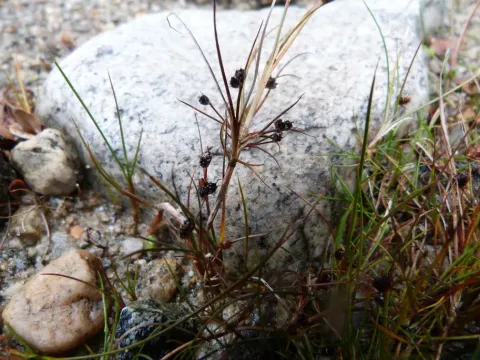
New Zealand rush
Juncus novae-zelandiae
The New Zealand rush (Juncus novae-zelandiae) is a perennial herbaceous plant belonging to the Juncaceae family. It is a moisture-loving species that thrives in wetland environments, including marshes, bogs, and the banks of streams, where it plays a significant role in maintaining the integrity of moist habitats.
What the section contains
New Zealand rush
Native to New Zealand, this plant is well-adapted to the cool and temperate climates found in its natural range. In agricultural settings, it is primarily recognized for its utility in phytoremediation and soil stabilization, as its robust root system is highly effective at binding wet or loose soils.
The plant requires acidic to neutral soil conditions with high organic matter content and consistent moisture availability. It is strictly hydrophytic, meaning it cannot survive in well-drained or dry land environments. Inadequate water supply leads to rapid wilting and the subsequent death of the plant colonies.
Botanically, the New Zealand rush is characterized by its tufted growth habit and dense, grass-like culms that are resilient to periodic flooding. The root structure is dense and fibrous, allowing the plant to spread effectively through rhizomes, which creates a protective cover for the underlying ground.
Cultivation requirements focus heavily on site selection, which must provide permanent saturation or waterlogging. While it requires minimal fertilization, the management of the hydrology is essential for success. It is not recommended for traditional pastures, as its nutritional value for livestock is minimal compared to cultivated forage grasses.
The economic utility of Juncus novae-zelandiae is limited to environmental management. It is not harvested for food or livestock fodder. Instead, it serves as a valuable bio-engineering tool for erosion control in irrigation channels and the mitigation of sedimentation in artificial drainage systems.
When management intervention is required, manual or light machinery clearing is used to control the spread of the species in areas where it might interfere with hydraulic flow. Proper timing ensures that the plant does not set seeds, preventing unwanted colonization of surrounding infrastructure.
The primary threats to the species involve drastic changes in land use, particularly large-scale drainage projects that lower the water table. Because it is highly specialized for wetlands, the plant lacks defenses against desiccation. Fungal infections can occur in stagnant water if the root system becomes damaged or stressed.