
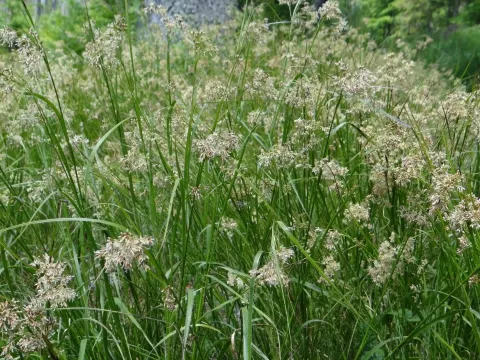
Woodrush
Luzula hybrids
Woodrush, belonging to the Juncaceae family, is propagated through both seed sowing and vegetative division. Sowing seeds outdoors is ideally done in late autumn, as the seeds require a period of natural cold stratification to germinate successfully.
What the section contains
Woodrush
Spring sowing is also possible provided that the seeds have been pre-chilled in cold conditions for several weeks. Seeds should be sown on the surface of the soil, as they require exposure to light to trigger the germination process.
Vegetative propagation via division of mature clumps is best carried out in early spring or late summer, immediately after the plant's active flowering phase has concluded.
When dividing, it is crucial to maintain the integrity of the root system, as Luzula is sensitive to root disturbance and requires adequate time to re-establish its growth.
Transplanting seedlings to their permanent location should be done following a spacing plan based on the specific species, typically maintaining 25–40 centimeters between individual plants.
The culture prefers moderately moist soils with an acidic to neutral pH level, which is a key factor to consider when selecting an appropriate cultivation site.
Most Luzula species are highly shade-tolerant, making them ideal for development under tree canopies where other plant species often struggle due to limited direct sunlight.
Healthy growth requires loose, fertile soil with good drainage, as water stagnation during the winter months can lead to crown rot and damage to the root system.
Woodrush is characterized by excellent frost resistance and can endure severe climate conditions while maintaining the decorative appearance of its foliage even in low temperatures.
In regions with hot and arid climates, it is essential to provide regular watering, especially during prolonged dry spells, to prevent the root ball from dehydrating.
Woodrush is noted for its high resistance to the majority of pathogens that commonly affect traditional grass crops, making it a valuable asset in eco-friendly landscape design.
The primary threat to young plants includes slugs and snails, which may feed on the tender leaf blades, particularly in high-humidity environments.
Improper cultivation practices, specifically excessive soil moisture combined with poor air circulation, may trigger fungal infections leading to decay at the base of the shoots.
Pests specific to other grasses, such as aphids or spider mites, rarely colonize Luzula plantings due to the unique structural properties of their leaves.
Disease prevention is primarily achieved through adherence to standardized agricultural practices, timely weeding, and avoiding overcrowding of the plantings to ensure proper air flow.
The commercial and practical utility of Woodrush is focused on decorative landscaping and soil stabilization, therefore, no traditional agricultural harvesting process is required.
At the end of the vegetation period, the plant's aesthetic value may diminish; therefore, sanitary pruning of spent flower spikes is performed to maintain a tidy appearance.
If the culture is intended for use in dried flower arrangements, the inflorescences should be cut at the peak of their opening, before the seeds begin to shed naturally.
Maintenance at the end of the season involves removing damaged or yellowing leaves, which encourages plant rejuvenation and reduces the accumulation of debris that might shelter pests.
Mass division of clumps for propagation or rejuvenation of the planting area is recommended no more than once every 5 to 7 years to allow the plants to develop full vegetative density.