
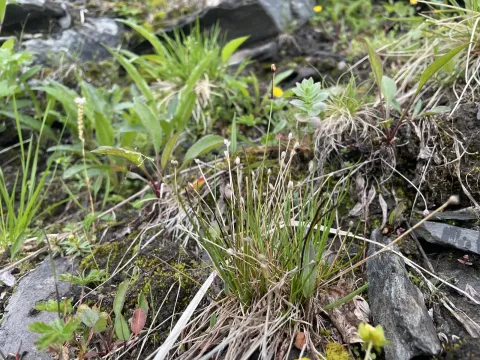
Two-flowered rush
Juncus biglumis
The two-flowered rush (Juncus biglumis) is a perennial herbaceous plant belonging to the Juncaceae family. It is a diminutive species adapted to thrive in the harsh environments of arctic regions and high-altitude mountain zones.
What the section contains
Two-flowered rush
Its natural range is circumpolar, extending across the tundra zones of Russia, Scandinavia, and North America. The plant typically inhabits wet, marshy substrates, often found along the banks of small streams or areas influenced by groundwater seepage.
As a mesohygrophyte, this plant requires constant soil moisture throughout its short growing season. It exhibits remarkable frost resistance and an ability to persist beneath heavy snow cover, making it a well-adapted component of cold-climate ecosystems.
Botanically, it forms small, tufted clumps with basal leaves and erect stems. The inflorescence is compact and characterized by the presence of two distinct bracts, or scales, which protect the flowers in challenging alpine or arctic conditions.
While not a conventional agricultural crop, this species serves an essential role in stabilizing moist, unstable soils in the north. It provides a niche habitat and contributes to the biodiversity of fragile arctic landscapes.
The species possesses inherent resistance to many pathogens common in more temperate climates, primarily due to the severe environmental conditions of its habitat. There are no significant pests known to affect it in its native range.
The primary threat to Juncus biglumis is the alteration of hydrological conditions caused by global climate changes. As wetlands dry out, the specialized niche required for its growth disappears, leading to population decline.
Human activities, such as infrastructure development or soil disturbance, can lead to severe erosion in arctic areas, directly threatening the plant's survival. The species is highly sensitive to the disruption of its fragile soil crust.
As temperatures rise, competition from more aggressive, woody plant species increases. This shift in vegetation composition can effectively crowd out the two-flowered rush, which grows slowly and struggles to compete under warmer conditions.
Management of this species is focused on habitat conservation rather than disease or pest control. Because it is not an industrial or cultivated crop, its protection is strictly tied to the preservation of undisturbed arctic ecosystems.