
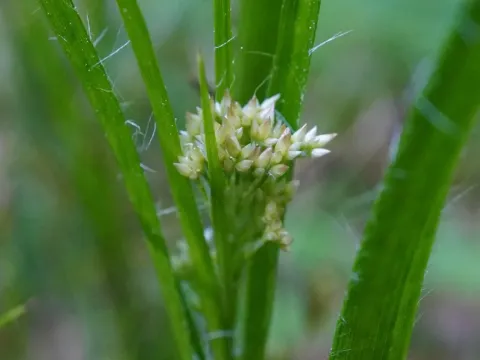
White wood-rush
Luzula luzuloides
White wood-rush (Luzula luzuloides) is a perennial grass-like plant belonging to the Juncaceae family. It is native to forests across Europe, where it thrives in shaded environments and on acidic, forest-floor soils.
What the section contains
White wood-rush
The plant is known for its tufted growth habit and leaves fringed with soft white hairs, which gives it a distinct appearance. It forms dense carpets that are highly effective at preventing soil erosion in woodland or landscaped garden settings.
Optimal growth requires well-drained but consistently moist soil. It is particularly well-adapted to environments with low pH levels, making it suitable for areas where other traditional crops might struggle with soil chemistry.
White wood-rush is a shade-tolerant plant, performing exceptionally well under the canopy of trees or in semi-shaded borders. It is a robust species that requires minimal intervention once established in its preferred habitat.
For agricultural and landscaping purposes, it is recommended to maintain a layer of organic mulch around the plants during the first growing season. This helps to simulate natural forest floor conditions and retain essential soil moisture.
The white wood-rush is generally resistant to most common plant diseases. Its natural chemical composition acts as a defense mechanism, keeping it healthy and vigorous in most stable environments.
Pest pressure is relatively low for this species. However, under high-density planting conditions, snails and slugs may become a nuisance, especially in shaded, damp areas where the grass remains succulent.
Fungal issues, such as leaf spot, may occur if the plants are placed in areas with poor air circulation or stagnant water. Ensuring adequate spacing between individual plants is the best preventative strategy.
Cultural control, such as removing debris and old leaf litter in early spring, helps reduce the population of potential pests and prevents the spread of dormant fungal spores in the plantation.
Given its hardiness, the use of chemical pesticides on white wood-rush is rarely necessary. Promoting biodiversity within the planting site often helps maintain a balance that suppresses pest outbreaks naturally.