
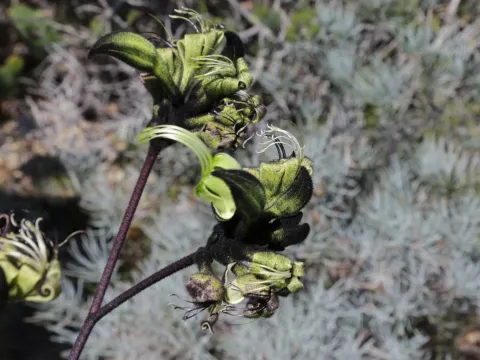
Macropidia
Macropidia
Propagation of Macropidia is generally achieved through seeds or careful division of the rhizomes, which requires precise environmental control.
What the section contains
Macropidia
Sowing should take place in late winter or early spring using a well-draining, gritty potting mix that mimics the plant's native Australian habitat.
Seeds benefit from temperature fluctuations during the germination phase, and maintaining a steady 20–25 degrees Celsius is crucial for success.
Watering must be strictly monitored to prevent fungal growth, ensuring the soil remains moist but never waterlogged during the early developmental stage.
Once the seedlings are large enough to handle, they are transplanted into individual pots, allowing them to establish a robust root system before moving outdoors.
Macropidia belongs to the Haemodoraceae family and is native to the southwest region of Western Australia, favoring sandy, nutrient-poor soil conditions.
This species thrives under full sun exposure and requires excellent drainage, as the roots are highly susceptible to rot in heavy or clay-based soils.
It is sensitive to phosphorus-rich fertilizers, so growers should use specifically formulated low-phosphorus feeds to avoid burning the root system.
The plant performs best in a climate that provides warm temperatures and low humidity, reflecting its natural preference for arid or semi-arid environments.
Air circulation is vital for maintaining the health of the foliage, especially when the plant is kept in greenhouse conditions or restricted indoor spaces.
The most significant threat to Macropidia is root rot, typically caused by improper watering techniques or poor substrate drainage in the root zone.
Pests such as snails and slugs pose a constant danger to the plant, frequently targeting the succulent stems and developing flower buds during the night.
Fungal leaf spot diseases can emerge if the plant is kept in an environment with high humidity and insufficient airflow, impacting the overall aesthetics.
Preventative measures include maintaining clean cultivation areas and avoiding overhead watering, which helps keep the foliage dry and healthy.
If disease symptoms appear, targeted application of copper-based fungicides can help manage the infection and protect the remaining healthy tissues.