
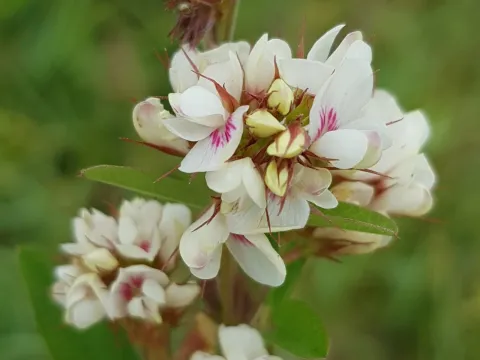
Hairy lespedeza
Lespedeza villosa
Hairy lespedeza (Lespedeza villosa) is a perennial legume highly valued for its adaptability. The optimal sowing window is in the spring, once soil temperatures consistently reach 10-12°C, ensuring robust germination and effective establishment.
What the section contains
Hairy lespedeza
When sowing, seeds should be placed at a shallow depth of approximately 1.5 to 2 centimeters. Because the seeds are small, deeper planting can exhaust their energy reserves before they emerge through the soil surface.
Standard seeding rates range from 12 to 16 kilograms per hectare. It is essential to ensure a clean, weed-free seedbed, as the seedlings of Lespedeza villosa are known for their slow initial growth and struggle to compete with weeds in the early stages.
To ensure successful nodulation, it is often recommended to inoculate seeds with specific nitrogen-fixing bacteria, especially when introducing the crop to a field where lespedeza has not been grown previously.
Using a mechanical drill for sowing helps maintain consistent seed placement and density, which are critical factors in achieving a uniform and high-yielding forage stand.
This crop is recognized for its significant drought tolerance and ability to thrive on poor, sandy, or acidic soils where other common legumes might fail. It utilizes an extensive root system to reach moisture deep within the soil profile.
The plant prefers well-drained soils and exhibits moderate tolerance to soil acidity, making it a valuable option for rehabilitating degraded land. However, it does not tolerate waterlogged conditions, which can lead to root rot.
Sunlight is a primary requirement; hairy lespedeza is intolerant of shade. Optimal growth is achieved in open fields with full exposure to sunlight throughout the growing season, which promotes both vegetative mass and reproductive potential.
It is moderately cold-hardy, allowing it to survive temperate winters effectively. The plant enters a dormant phase during the colder months and resumes growth rapidly when spring temperatures increase.
Soil fertility management should focus on phosphorus and potassium levels, as the plant can independently provide much of its nitrogen through symbiotic atmospheric fixation.
The yield of hairy lespedeza is highly dependent on environmental conditions and harvest management. In ideal scenarios, the crop can provide two productive cuts per growing season, offering a stable source of forage.
Green matter yields typically range from 15 to 25 metric tons per hectare. While this may be lower than intensive grasses, the high protein content of the foliage adds significant value to the overall nutritional profile of the livestock diet.
Maximizing yield requires timing the harvest correctly. Harvesting during the early flowering stage ensures a balance between total biomass volume and the nutritional quality, preventing the over-accumulation of lignin.
Seed yields can reach between 300 and 600 kilograms per hectare. Proper management of insect pollinators during the flowering period is crucial for maximizing seed set and overall profitability of the seed crop.
The stand longevity of this species can extend to 5–7 years, making it an economically attractive choice for land owners seeking long-term vegetation covers with minimal replanting frequency.
Fungal pathogens, particularly those causing leaf spot or anthracnose, can be problematic during periods of high humidity. Proper field sanitation and avoiding overcrowding are essential preventive measures.
Insect pests, including various weevil species, can damage both the foliage and the reproductive organs, potentially reducing seed production if not monitored and managed with integrated pest control methods.
Root-knot nematodes can pose a threat, particularly in lighter, sandy soils. Implementing a diverse crop rotation cycle is the most effective strategy to keep nematode populations at sub-economic levels.
Weed encroachment is a primary threat during the establishment phase. Using pre-emergent control or manual weeding until the crop forms a dense canopy is critical for long-term stand success.
Winter damage is rare but can occur during severe winters with no snow cover; monitoring field health in early spring allows for timely assessment of stand density and necessary overseeding.
Harvesting for hay is best performed at the onset of flowering. At this stage, the plant has high protein and mineral content, which significantly enhances its digestibility and nutritional utility for livestock.
Stubble height is a critical parameter; maintaining 7–10 centimeters of stubble allows for faster regrowth and protects the plant's carbohydrate reserves, ensuring a healthy return after every harvest.
For seed production, the harvest should occur when the majority of pods have turned dark and mature. Swift harvesting after maturity minimizes the risk of seed shattering and loss due to weathering.
After cutting, the material must be dried properly to preserve nutrient quality. If moisture remains high, the risk of fungal growth and quality degradation during storage increases substantially.
Proper storage in a dry, ventilated shed or under well-protected haystacks is necessary to preserve the nutritional integrity of the harvested forage throughout the winter months.