
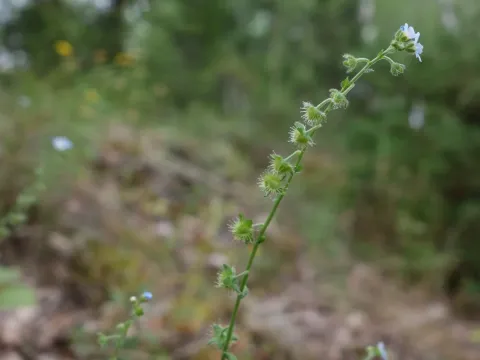
Hackelia deflexa
Hackelia deflexa
Hackelia deflexa, commonly known as nodding stickseed, belongs to the Boraginaceae family. This species is native to diverse forest and mountainous regions across the Northern Hemisphere.
What the section contains
Hackelia deflexa
The plant thrives in moist, well-drained soils that are rich in nutrients. It typically occupies habitats such as forest clearings, scrublands, and rocky slopes where organic matter accumulates.
Environmentally, this plant prefers temperate or cool climates with adequate seasonal rainfall. It exhibits a high degree of cold hardiness, making it suitable for areas with harsh winter conditions.
Agricultural management requires careful attention to soil texture and drainage. It does not tolerate prolonged waterlogging, as the root system relies on effective soil aeration to maintain vigor.
Botanically, the plant is distinguished by its nodding, loose inflorescences and specialized fruit structure. The seeds possess small hooks that facilitate dispersal by attaching to animals, a trait typical of the genus.
Fungal pathogens remain the primary biological threat to Hackelia deflexa, particularly under conditions of high humidity or poor field ventilation.
Pest pressure often stems from sap-sucking insects like aphids, which can stunt vegetative growth and reduce the plant's overall reproductive success.
Leaf spots caused by various fungi can affect the photosynthetic efficiency of the plant, leading to premature senescence of foliage during the growing season.
Proactive monitoring is essential to detect pest infestations early. Integrated pest management strategies should focus on maintaining optimal spacing to prevent humidity buildup.
Sanitation practices, such as removing affected plant debris, are critical to interrupt the life cycles of common pathogens and prevent their spread to healthy plant populations.