
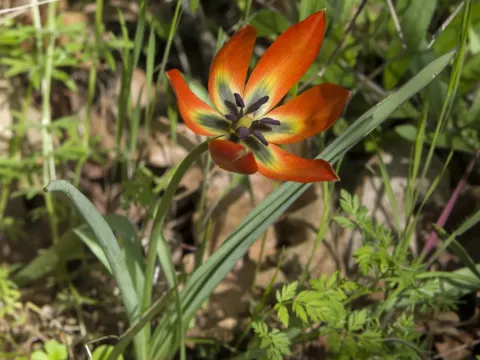
Hager's Tulip
Tulipa hageri
Hager's Tulip (Tulipa hageri) is a bulbous perennial belonging to the Liliaceae family. It is a distinct species of wild tulip, highly regarded by horticulturalists for its delicate appearance and natural charm, making it a perfect candidate for rock gardens and naturalistic plantings.
What the section contains
Hager's Tulip
The species is native to the mountainous regions of Greece and Turkey. In its natural habitat, it thrives on stony slopes where the soil is porous, ensuring rapid drainage and preventing waterlogging during dormant seasons.
This tulip has a high demand for solar energy. To achieve optimal flowering, it requires a position in full sun, protected from harsh winds that could damage its stems or reduce the intensity of the blooms.
The soil environment must mimic its native alpine conditions. Ideal substrates are light, well-draining sandy or loamy soils with a neutral pH. The addition of organic matter should be modest to avoid excessive fertility which may encourage vegetative growth over flowering.
Dormancy requirements are essential for the survival of this species. After the foliage dies back in late spring or early summer, the soil should be kept dry to simulate the Mediterranean summer, which is critical for proper bulb maturation.
Planting should be executed in the autumn when the ground temperature has cooled to approximately 10 degrees Celsius. Early planting in warm soil can lead to premature sprouting, making the bulbs vulnerable to winter frost.
The bulbs should be planted at a depth of about 8–10 centimeters. This depth provides sufficient insulation against extreme winter temperatures while allowing the shoot to emerge reliably when spring warmth arrives.
Treating the bulbs with a fungicide prior to planting is highly recommended to prevent soil-borne pathogens. This simple step significantly reduces the risk of root rot during the moist spring transition.
Space the bulbs approximately 10–15 centimeters apart. Adequate spacing is necessary to ensure good airflow between plants, which is a key factor in preventing the spread of humidity-related fungal diseases.
Mulching the bed after planting with a thin layer of grit or compost can improve moisture control. However, avoid thick organic mulches that retain too much water, as this could lead to bulb decay.
The most significant threats to Tulipa hageri are fungal diseases such as gray mold (Botrytis) and Fusarium rot. These are primarily caused by poor drainage and excessive moisture levels in the soil.
Rodents, particularly voles and mice, are major pests. They often target bulbs during the winter months. Protecting the bulbs with wire cages or hardware cloth during planting is often necessary in areas with high rodent activity.
Pests like the tulip bulb aphid or onion fly can infest the plants, causing weakness and reduced flower quality. Monitoring and using systemic insecticides when necessary can help manage these populations effectively.
Viral infections, characterized by streaking or mottling of the flower petals, are incurable. Infected bulbs must be rogued out and destroyed to prevent the virus from spreading to neighboring plants via insects.
Maintaining a clean garden environment is vital. Removing diseased plant debris promptly prevents fungal spores from overwintering and reinfecting the garden bed in the following spring season.