
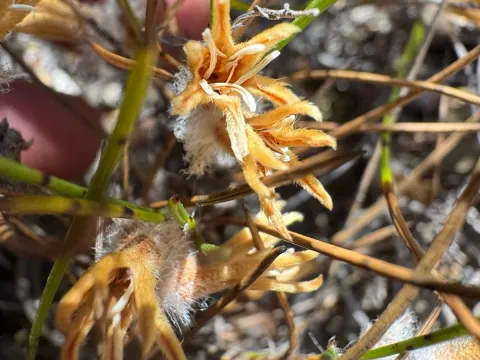
Conostylis
Conostylis R. Br.
Conostylis is a genus of perennial herbs belonging to the family Haemodoraceae. This plant is native to the southwestern region of Western Australia, where it thrives in diverse habitats ranging from sandplains to woodland areas, displaying remarkable resilience to harsh environments.
What the section contains

Conostylis
Botanically, Conostylis is recognized by its narrow, often hairy leaves arranged in dense basal clumps. The flowers are typically tubular, protected by fine hairs, and arranged in terminal heads, which serve as a primary aesthetic feature for horticultural use.
To cultivate Conostylis successfully, growers must provide highly permeable, well-draining sandy soils. The root system is naturally adapted to lean soil profiles, and excessive fertilization or organic matter can prove detrimental to the plant's long-term health and growth vigor.
The plant requires full sun exposure to maintain its compact form and stimulate abundant flowering. In regions with high humidity or frequent rainfall, it is critical to provide excellent aeration and ensure that the root zone does not remain waterlogged for any extended period.
From an agricultural and commercial standpoint, Conostylis is utilized primarily within the floriculture industry and as an ornamental landscaping plant. Its drought-tolerant nature makes it an excellent candidate for xeriscaping and sustainable garden designs in arid or Mediterranean climates.
The primary threat to Conostylis is root rot caused by Phytophthora species, which are prevalent in moist or poorly drained soils. Once established in the root system, these pathogens are difficult to control, making preventive soil management a top priority.
Pests such as mealybugs and spider mites may occasionally infest the plant, particularly in sheltered environments or under greenhouse conditions. These pests can weaken the foliage and reduce the ornamental appeal, necessitating regular scouting and appropriate systemic insecticide application.
Improper soil pH levels can lead to nutrient deficiencies, manifesting as leaf chlorosis. Conostylis generally performs best in neutral to slightly acidic soils, and any significant deviation can disrupt the plant's ability to absorb micronutrients.
Poor airflow around the base of the plant creates a microclimate conducive to mold and fungal leaf spot development. Maintaining proper plant spacing is essential to ensure adequate air circulation and to reduce the ambient humidity around the basal rosette.
In cases of visible stress, it is vital to inspect the drainage capabilities of the site immediately. Often, simply amending the planting medium with coarse sand or horticultural grit can mitigate the risk of disease and improve the overall vigor of the Conostylis specimens.