
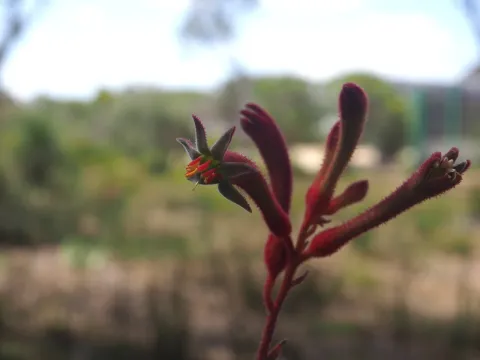
Anigozanthos
Anigozanthos
Propagation of Anigozanthos in commercial settings is most often carried out by seeds or by dividing the rhizome. Seeds are sown in a well-drained substrate with low phosphorus content, as members of the Haemodoraceae family are highly sensitive to this element.
What the section contains


Anigozanthos
The optimal time for sowing is spring, when the daylight hours begin to increase, which favors seed germination. Seeds can be stratified beforehand to improve germination rates.
When sowing, it is important not to bury the seeds too deeply; they should only be lightly covered with vermiculite or fine sand. The temperature regime during this period should be maintained between 20 and 25 degrees Celsius.
The first seedlings appear unevenly, and the process can take from 3 to 6 weeks. During this period, it is necessary to monitor humidity, avoiding waterlogging, which can provoke fungal infections.
Young plants are pricked out into individual containers after the appearance of two or three true leaves, providing them with maximum light to form a strong rosette.
Anigozanthos originates from Western Australia, which determines its high requirements for sunlight and light levels. The crop belongs to the Haemodoraceae family.
The plant prefers sandy or loamy soils with excellent drainage, as stagnant water is detrimental to the root system. Soil acidity should be slightly acidic or neutral.
During the active growing season, Anigozanthos requires moderate watering. It is important to water at the base, avoiding getting water on the fuzzy leaves and inflorescences, which can cause rot.
Anigozanthos is critically sensitive to an excess of fertilizers. It is recommended to use formulas with minimal phosphorus content, as plants accustomed to poor Australian soils react quickly to phosphate toxicity.
For successful cultivation, good air circulation around the bushes is necessary. In protected ground, regular ventilation is mandatory to prevent the stagnation of humid air.
The productivity of Anigozanthos is assessed by the number of flower stalks suitable for cutting. With proper agrotechnics, one adult bush can produce up to 10–15 flower stalks per season.
Varietal differences significantly affect yield: selective hybrids intended for commercial use have a longer flowering period and higher inflorescence density.
Harvesting on a commercial scale is carried out in stages, as the flowers on the inflorescence open. Cut flowers have high transportability and a long vase life.
Maximum yield is reached in the 2nd or 3rd year of the plant's life, after which it is recommended to rejuvenate the bushes or replace them with new specimens.
The economic efficiency of the crop depends on the region of cultivation and proximity to markets, as flowers require careful packaging due to the fragility of the fuzzy parts.
The most common threat is ink spot disease, caused by the fungus Alternaria proteae. The disease manifests as black spots on the leaves that spread rapidly, which can lead to the death of the plant.
Root rots, such as Phytophthora, occur due to improper watering and poor drainage. They are almost untreatable, so prevention is the only method of protection.
Among pests, aphids and spider mites cause the most damage, as they congregate on the delicate parts of the flower stalks. They suck the sap, deforming the stems and reducing the commercial quality.
Snails and slugs can damage young leaf rosettes, especially in open fields or damp greenhouses. It is recommended to use physical barriers to protect the plantings.
To control diseases and pests, agrotechnical standards must be strictly followed, plants must be inspected regularly, and affected parts of the bush should be removed in a timely manner.
Harvesting of flower stalks begins when 30 to 50 percent of the flowers on the inflorescence are open. This ensures an optimal balance between decorativeness and longevity after cutting.
Cutting is best done early in the morning or late in the evening when the plant is fully turgid. A sharp, sterile tool is used so that the cut is clean and heals quickly.
Immediately after cutting, the flower stalks are placed in clean water with added preservatives for cut flowers to prevent bacterial growth.
Packaging is carried out in a vertical position to avoid bending the stems and damaging the velvety fuzz of the inflorescences, which is the hallmark of the crop.
The temperature regime during the storage of cut Anigozanthos should be cool, which slows down the aging processes and allows the exotic flower to remain fresh for longer.