
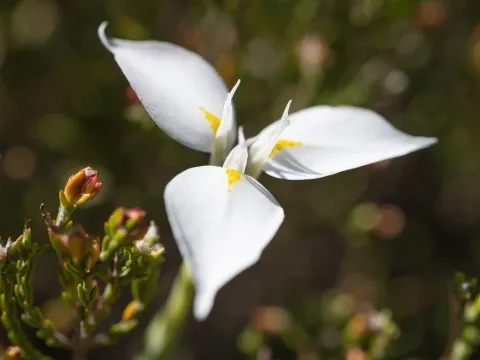
Gynandriris
Gynandriris
Gynandriris is a genus of perennial herbaceous plants belonging to the Iridaceae family. In contemporary taxonomy, most species formerly classified under this genus are now included within the broad Iris genus. These plants are essentially cormous geophytes adapted to climates with distinct dry and wet seasons.
What the section contains
Gynandriris
The native distribution of Gynandriris covers parts of the Mediterranean Basin, Southern Africa, and Western Asia. In these regions, they thrive in open, sunny meadows and rocky slopes, where the soil composition provides excellent natural drainage to accommodate their dormant period.
Botanically, they are distinguished by their small, iris-like flowers and a life cycle that begins with autumn or spring rains. The foliage typically consists of narrow, grass-like leaves that appear from a small corm, which requires a significant dry spell to mature properly for the next growth season.
Cultivation requirements focus heavily on the substrate. Gynandriris needs sandy, grit-rich soil with a neutral or slightly alkaline pH. Planting depth should be shallow, and the site must be selected for maximum solar exposure to ensure that the corms dry out completely during the summer months.
The agrotechnical approach should prioritize mimicking their natural habitat. Regular irrigation is beneficial during the active growth and flowering phase, but watering must be strictly reduced or entirely stopped as the foliage begins to yellow, preventing the corm from rotting during its essential dormant phase.
The primary threat to Gynandriris health is fungal infection, particularly various forms of basal rot and bulb rot. These pathogens thrive in conditions where moisture lingers too long around the corm, making proper drainage the most important factor in the plant's long-term survival.
Pests can include wireworms and bulb mites, which are particularly problematic if the planting material is not inspected before placement. These insects can bore into the corm, weakening the plant and creating entry points for secondary bacterial or fungal infections.
Disease management starts with preventative treatment of corms using systemic fungicides before planting. Ensuring that the bulbs are stored in a cool, dry, and well-ventilated environment during their dormant period is crucial to preventing the development of mold or mites.
Crop rotation and selecting fresh soil beds for each planting season are recommended practices to minimize the buildup of soil-borne pathogens. Avoid planting Gynandriris in areas that have previously held diseased bulbs or other susceptible members of the Iridaceae family.
If symptoms of decay appear, it is essential to excavate the affected bulb immediately to protect surrounding plants. The soil area should be cleared of debris and treated to ensure that the environment remains unsuitable for the recurrence of the specific pathogen detected.