
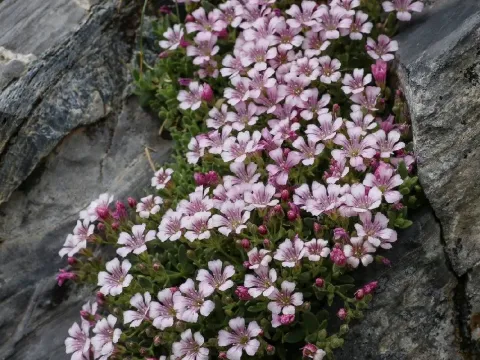
Gypsophila achaia
Gypsophila achaia
Sowing of Gypsophila achaia seeds is typically conducted in the spring when soil temperatures stabilize at 15-18 degrees Celsius. For professional production, starting seeds in a controlled greenhouse environment is the preferred method to ensure uniform germination.
What the section contains
Gypsophila achaia
The seeds require light to germinate, so they should be sown on the surface of a fine-textured, well-draining substrate. Pressing them lightly into the soil surface without covering is essential to allow proper light penetration for the small seeds.
Maintaining high humidity during the early germination phase is critical, which can be achieved through misting or using transparent covers. Ventilation must be increased once the primary leaves emerge to prevent damping-off diseases.
Seedlings should be thinned or transplanted carefully into individual cells to prevent competition and damage to their sensitive taproot system. This development stage usually lasts several weeks until the plants are ready for hardening off.
Hardening off involves gradually exposing the plants to outdoor conditions over a week to acclimatize them to direct sunlight and wind before final transplanting into the field.
Gypsophila achaia is a drought-tolerant species originating from rocky habitats and requires highly specific soil conditions to thrive. It thrives in well-aerated, slightly alkaline soils with a high mineral content and excellent drainage.
Exposure to full sun is the primary requirement for this crop to maintain its compact habit and prolific flowering potential. Inadequate light levels will lead to leggy, weak plants that are susceptible to lodging and pests.
While the plant is adapted to arid conditions, periodic moderate irrigation is necessary during the establishment phase. Once deep roots are developed, the crop becomes significantly more resilient to dry spells.
Optimal growth occurs at moderate temperatures; however, the plant exhibits good winter hardiness provided the soil moisture levels are low. High moisture combined with cold temperatures is the most common cause of crop loss.
Fertilization should be handled with caution, as high levels of nitrogen can result in excessive foliage growth at the expense of flower production. Phosphorus-rich fertilizers are better suited to support root and bloom development.
The primary threats to Gypsophila achaia are fungal infections primarily driven by excess humidity in the root zone. Root rot caused by Fusarium and Phytophthora species can decimate entire patches if drainage is inadequate.
Botrytis, or gray mold, often infects flower buds and aging foliage during periods of cool, wet weather. Removing dead plant matter and ensuring good airflow between plants is essential for effective disease management.
Pest pressure from aphids can be significant during the active growth period. These insects target soft succulent tissues, causing deformities and potentially transmitting viral diseases to the crop.
Nematodes are another serious soil-borne pest that can impede plant vigor by damaging the root system, eventually leading to stunted growth. Using certified, pathogen-free planting material is a key preventative measure.
Regular scouting and integrated pest management (IPM) practices are required to monitor for pest outbreaks and manage potential fungal pathogens before they reach the economic threshold for intervention.