
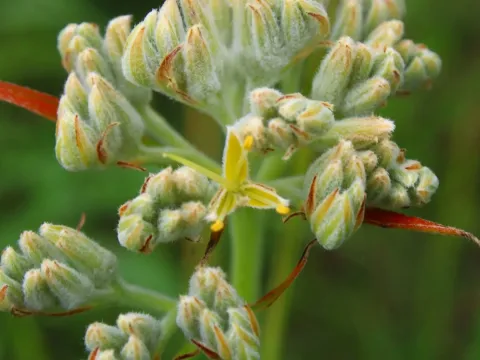
Lachnanthes
Lachnanthes
Lachnanthes, a genus within the Haemodoraceae family, typically propagates through seeds which require specific environmental cues for germination. Sowing is best performed in early spring using a well-draining, acidic peat-based or sandy mix.
What the section contains
Lachnanthes
To enhance germination rates, seeds often benefit from cold stratification, which simulates the natural winter dormancy period. The seeds should be sown at a shallow depth of no more than 0.5 cm to ensure adequate light exposure for sprouting.
Moisture control is paramount during the sowing phase. The medium must be kept consistently damp, though not waterlogged, to support the delicate root systems of the emerging seedlings during their initial development.
Germination timing can be somewhat unpredictable, sometimes taking several weeks to show signs of growth. Growers should maintain stable temperatures between 20°C and 23°C throughout the germination period.
Once seedlings reach a sufficient size with multiple true leaves, they can be transplanted into individual pots or beds. Gentle handling is required to avoid damage to the root system, which is particularly sensitive at this stage.
Native to North America, particularly the coastal regions, Lachnanthes is well-adapted to moist or boggy environments. It thrives in soils that remain consistently damp throughout the growing season.
Soil acidity is a critical requirement for this genus. It prefers soils with a low pH (between 4.5 and 5.5). In soils with higher pH levels, the plant often exhibits nutritional deficiencies, particularly iron chlorosis.
The plant requires ample sunlight but may tolerate partial shade in hotter climates to protect the foliage from leaf scorch. High ambient humidity is also beneficial for the plant's overall vigor.
Nutrient requirements are moderate; however, the plant responds best to organic-based fertilizers that do not significantly alter the soil's acidity. Over-fertilization can damage the sensitive roots.
In terms of climate, Lachnanthes performs best in regions that mimic its natural wetland habitat. In areas with extreme winters, container cultivation is recommended to allow for indoor protection during the dormant season.
The primary threats to Lachnanthes are fungal diseases associated with poor aeration and saturated soil conditions. Pathogens such as Pythium can rapidly destroy root tissue in stagnant environments.
Pest issues generally involve sap-sucking insects like aphids and spider mites, especially when the plant is grown in greenhouse conditions where air circulation might be insufficient.
Environmental stress, such as drying out or sudden changes in pH, can make the plant more susceptible to opportunistic infections. Monitoring for leaf yellowing or stunted growth is essential for early diagnosis.
Integrated pest management, including regular sanitation of tools and controlled watering schedules, is the most effective way to prevent widespread outbreaks of both diseases and pests.
- Root rot caused by stagnant water.
- Aphid infestations on new shoots.
- Spider mite outbreaks in dry, hot conditions.
- Nutrient-related chlorosis.