
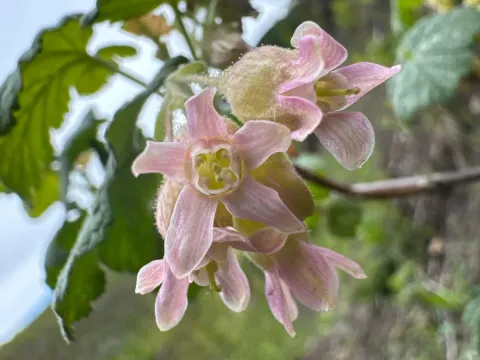
Sticky currant
Ribes viscosissimum
Ribes viscosissimum, commonly known as the sticky currant, is a deciduous shrub belonging to the Grossulariaceae family. It is native to the western parts of North America, where it thrives in mountain forest clearings and rocky slopes.
What the section contains
Sticky currant
The plant is distinguished by the presence of dense, sticky glandular hairs on its leaves and stems, which release a distinct, resinous fragrance. It grows into an upright shrub reaching heights of 1 to 2 meters and is characterized by its broad, lobed foliage.
This species requires well-drained, fertile soil that remains consistently moist but not waterlogged. In cultivation, it prefers locations with dappled sunlight, although it can tolerate full sun in cooler northern climates if the root zone is adequately mulched to retain moisture.
Agrotechnical practices involve yearly pruning to remove deadwood and maintain a healthy, open canopy structure. Applying organic fertilizers or compost during the early spring supports robust growth and improves the plant's overall vigor.
The sticky currant is valued primarily for its ornamental qualities rather than as a commercial fruit crop. Its spring bloom, featuring clusters of pinkish-white, bell-shaped flowers, makes it an excellent choice for naturalistic landscapes and wild-garden designs.
The sticky currant can be susceptible to powdery mildew during humid periods. Ensuring proper airflow through regular pruning and removing infected leaves are the most effective management strategies.
Pests such as aphids and spider mites can occasionally infest the foliage, particularly during dry spells. Monitoring the plant and washing the leaves with a gentle stream of water or insecticidal soap is recommended.
Leaf spot diseases may occur in poorly ventilated areas. Sanitation measures, such as clearing fallen leaf litter from beneath the shrub, are crucial for preventing the overwintering of fungal pathogens.
Root rot is a potential risk if the soil remains excessively wet for long durations. Proper drainage at the planting site is essential for preventing long-term damage to the plant's root system.
While the plant is highly resilient to cold temperatures, young shrubs may benefit from protective mulching during their first winter to stabilize soil temperature and prevent frost heaving.