
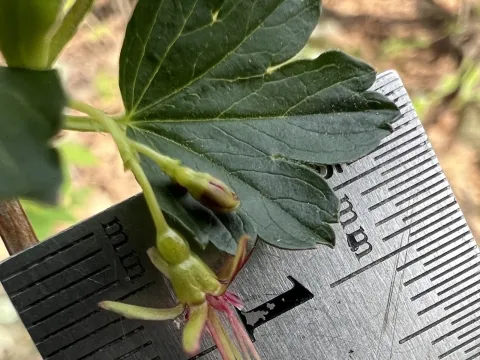
Roundleaf gooseberry
Ribes rotundifolium
The roundleaf gooseberry, scientifically known as Ribes rotundifolium, is a member of the Grossulariaceae family. This woody shrub is native to the Appalachian Mountains in the United States, where it thrives in high-elevation habitats.
What the section contains
Roundleaf gooseberry
The species is botanically distinct due to its characteristic rounded leaves with serrated margins. Its natural growth habit is typically found on rocky slopes and within cool, moist forest margins, reflecting its preference for specific ecological niches.
In terms of agricultural requirements, the plant demands well-drained, nutrient-rich soils to maintain healthy growth. It is highly tolerant of cool, temperate climates and requires consistent soil moisture during the spring and summer seasons to prevent dehydration.
Cultural practices should focus on maintaining a moderate level of shade if the plant is grown in areas prone to high summer heat. Proper mulching around the base of the shrub can help regulate soil temperature and retain necessary moisture levels.
While not a primary commercial crop, the roundleaf gooseberry is highly valued by breeders. Its genetic traits, including cold hardiness and resistance to certain stressors, make it a useful component in hybridization efforts for domestic currant and gooseberry varieties.
Powdery mildew is a significant threat to Ribes rotundifolium, especially in conditions where foliage remains wet for extended periods and air circulation is insufficient. Ensuring proper plant spacing is essential for disease prevention.
Leaf spot diseases, caused by various fungi, can lead to premature defoliation during the growing season. Management strategies should involve the removal of infected plant debris to reduce the overwintering inoculum in the soil.
Insect pests such as aphids often congregate on the succulent growth of young shoots. Their feeding can cause curling and yellowing of the leaves, which significantly impacts the overall photosynthetic capacity of the shrub.
Currant borers are potentially lethal pests that tunnel into the stems of the plant. Regular monitoring of the canes for exit holes or dieback is crucial for early intervention and maintaining the structural integrity of the bushes.
An integrated pest management approach, emphasizing sanitation and the use of environmentally friendly sprays when necessary, is recommended to maintain the health and productivity of these shrubs throughout their lifespan.