
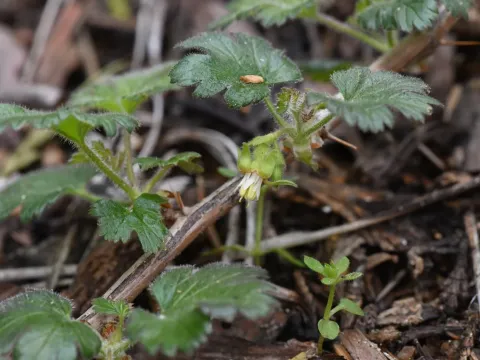
Tulare currant
Ribes tularense
The Tulare currant (Ribes tularense) is a wild shrub species belonging to the Grossulariaceae family. It is a rare endemic plant, primarily found in restricted mountainous habitats within California, USA, where it thrives in specific microclimatic conditions.
What the section contains
Tulare currant
The plant prefers humid forest settings, often found in sheltered canyons or ravines. Its habitat requires high atmospheric humidity and protection from extreme temperatures, as the species is sensitive to both intense drought and prolonged heat waves.
Regarding soil, this species demands well-drained, porous substrates rich in organic matter. A neutral or slightly acidic soil pH is considered optimal for nutrient uptake and root system development. It cannot tolerate waterlogged conditions which often lead to physiological decline.
Agrotechnical management involves mimicking its natural environment: providing partial shade and consistent moisture. In a controlled environment, these plants require careful placement to avoid the midday sun and ensure the root zone remains cool during the peak of summer.
While not a traditional commercial crop, Ribes tularense is of significant botanical interest. Its cultivation requires precise environmental control, as the species is not adapted to the harsh, open-field conditions typically used for commercial berry production.
The primary health threats to the Tulare currant are fungal pathogens such as powdery mildew, which can colonize the leaves and stems in conditions of poor air circulation and high humidity.
Pests such as aphids and spider mites are common concerns for the Ribes genus. These insects can cause significant damage to the plant by stressing the foliage and acting as potential vectors for viral diseases.
To maintain plant health, it is essential to employ preventative maintenance, such as selective pruning to increase airflow within the canopy and reduce the likelihood of fungal colonization on the leaf surface.
Sustainable pest management should prioritize the use of natural predators or physical removal of infested shoots rather than heavy chemical applications, which the wild species may be sensitive to.
Environmental stresses, including soil compaction and inappropriate irrigation practices, are secondary threats that significantly weaken the plant, making it more susceptible to opportunistic pathogens and pest infestations.