
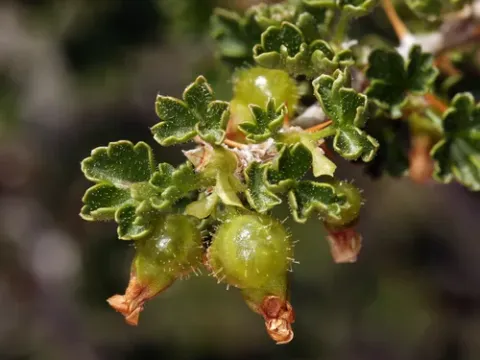
Velvet currant
Ribes velutinum
Velvet currant (Ribes velutinum) is a perennial deciduous shrub belonging to the Grossulariaceae family. Native to the western United States, this plant is primarily found in arid and mountainous regions, including California, Oregon, and Nevada, where it thrives in challenging habitats.
What the section contains
Velvet currant
The plant is highly adapted to rocky slopes and dry soils. Its botanical name, velutinum, refers to the velvety texture of its leaves, which is an evolutionary trait that helps the plant minimize moisture loss through transpiration in hot, dry environments.
When cultivating Ribes velutinum, it is essential to ensure excellent soil drainage. Like many species of the genus Ribes, it is sensitive to waterlogged conditions, which can lead to root rot. Sandy or rocky substrates with a neutral to slightly alkaline pH are ideal for its development.
This shrub requires full sunlight exposure to maintain its health and bloom effectively. It is naturally cold-hardy, as it originates from high-altitude areas, making it well-suited for temperate climates with cold, distinct winter periods.
Structurally, the plant is characterized by rigid branches often protected by spines, and its growth habit is generally compact. During the spring, it produces small, clustered flowers that are vital for local pollinator populations in its native range.
The agricultural potential of the Velvet currant is mainly found in its hardiness and genetic resistance to abiotic stressors. While not typically grown as a mass-market commercial berry, its fruits are edible and valued in traditional uses, often harvested from the wild.
The berries are relatively small, often spherical, and exhibit a range of colors from pale yellow to reddish-purple. Their flavor is distinct, often carrying a slightly tart or wild profile, which makes them suitable for artisanal processing into jams, jellies, or culinary infusions.
Yield consistency in Ribes velutinum is highly dependent on environmental conditions, particularly water availability during the early spring growth phase. In managed gardens, providing supplemental irrigation during fruit set can help stabilize annual yields.
Pruning is a necessary maintenance task to ensure consistent fruit production. By removing older, less productive wood and opening the canopy to light, gardeners can encourage new growth that typically bears the most fruit in subsequent seasons.
Because the plant is a wild relative of commercial currants, researchers look to it as a valuable resource for cross-breeding programs. Its genes may hold the key to developing new, more resilient berry varieties capable of thriving in changing global climate conditions.
The Velvet currant is susceptible to typical Ribes pests and diseases. Fungal pathogens, particularly powdery mildew, can cause significant distress during humid summer periods, covering leaves in a white, dusty-looking coating that inhibits photosynthesis.
Insect pests, such as aphids, can cluster on the tender new growth of the plant. Their feeding habits cause leaf curling and stunted shoot development. Monitoring for early signs of infestation is critical for preventing widespread plant damage during the active growing season.
In drier environments, spider mites can become an issue. These microscopic pests thrive in low-humidity conditions and cause a mottled, yellowed appearance on the foliage, which can eventually lead to premature leaf drop if not addressed.
Cultural control remains the best defense against threats. Keeping the area under the shrub clear of weeds and debris helps reduce humidity around the base and removes overwintering sites for various fungal spores and insect larvae.
Integrated pest management (IPM) strategies, such as the use of beneficial insects and neem-based soaps, are highly effective. Due to the plant’s ecological importance, avoiding harsh chemical pesticides is recommended to protect native pollinators and the surrounding ecosystem.