
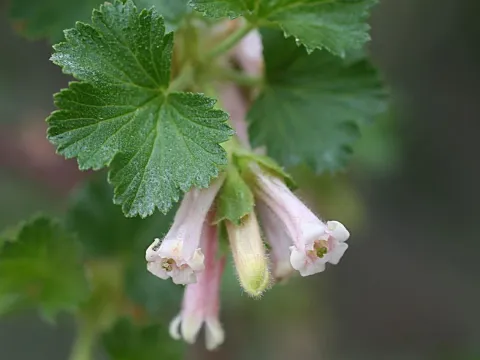
Squaw currant
Ribes inebrians
The squaw currant (Ribes inebrians) is a deciduous shrub that belongs to the Grossulariaceae family. It is native to the western regions of North America, where it thrives in diverse mountainous environments and open rocky slopes.
What the section contains
Squaw currant
This species is highly resilient and prefers well-drained, sandy, or rocky soils. It is well-adapted to environments where nutrient availability might be limited, demonstrating excellent survival strategies in rugged terrains.
The climatic requirements include a need for abundant sunlight and a tolerance for significant temperature fluctuations. It is a hardy plant capable of enduring cold winters, which is typical for its high-altitude native range.
Botanically, the plant is characterized by its compact, thorny stems that reach heights of up to 1.5 meters. The leaves are small, rounded, and often possess fine hairs or glandular secretions that help retain moisture.
The flowers are typically pale pink or white, blooming in the spring. While the fruit is technically edible, it is not commonly cultivated for agricultural purposes due to its flavor profile and the presence of thorns.
Like many species within the Ribes genus, the squaw currant is susceptible to powdery mildew. This fungal disease is particularly prevalent in humid conditions and can cause severe leaf distortion.
Various aphid species are known to colonize the plant, feeding on the nutrient-rich sap of the new growth. Their presence can stunt the development of new branches and invite further pest infestations.
Rust fungi represent a major threat to the foliage, causing brown spots and premature leaf abscission. This condition significantly impairs the plant's ability to undergo photosynthesis effectively.
Bud mites are a persistent problem that can cause the buds to swell abnormally and fail to bloom properly. Protecting the plant from these microscopic pests is essential for maintaining its health.
Environmental stress, such as prolonged drought or extreme heat, can diminish the plant's natural resistance, making it more prone to secondary infections from opportunistic pathogens.