
Stink currant
Ribes bracteosum
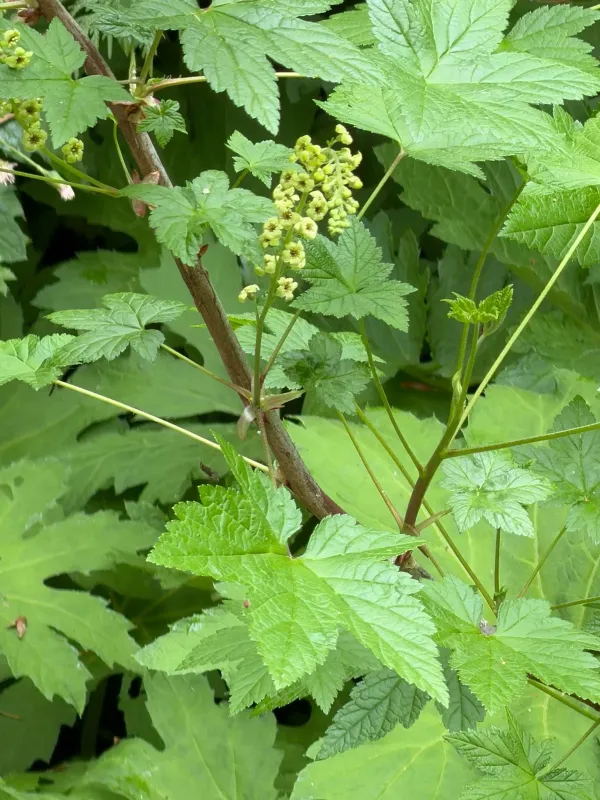
Description
Growing requirements
Ribes bracteosum, commonly known as the stink currant, belongs to the Grossulariaceae family. This large deciduous shrub is recognized for its impressive height, often reaching up to 3 meters in optimal conditions.
The species is native to the Pacific Northwest of North America. It thrives in moist coniferous forests, riverbanks, and shaded canyons, reflecting its requirement for high environmental humidity.
Cultivation requires a site with partial shade and protection from harsh, drying winds. It excels in rich, loamy soils that possess high water-holding capacity while ensuring sufficient drainage.
The plant is biologically distinct due to its large, deeply lobed leaves that emit a strong, resinous odor when crushed, and its elongated racemes of small flowers that transition into dark, glaucous berries.
In terms of climate, it is well-adapted to cool temperate zones, preferring consistent moisture throughout the growing season to support its vigorous vegetative growth and fruit production.
Main diseases and pests
Ribes bracteosum is susceptible to standard berry diseases such as powdery mildew and anthracnose, especially when planted in areas with poor airflow and excessive leaf wetness.
Common pests include aphids, scale insects, and mites, which feed on the sap of young leaves and shoots, potentially reducing the overall vigor and yield of the shrub.
Effective management includes maintaining a clean garden environment, removing plant debris, and implementing structural pruning to ensure adequate sunlight penetration and ventilation.
Integrated pest management strategies are recommended, focusing on the use of horticultural oils and soaps to manage soft-bodied pests without damaging the environment.
Early detection of infections and immediate removal of affected plant parts are crucial steps in preventing the spread of fungal spores during humid weather conditions.