
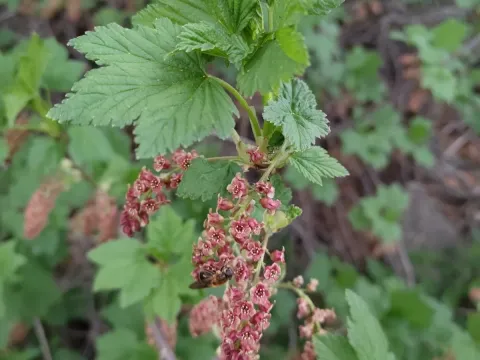
Rock currant
Ribes petraeum
Rock currant (Ribes petraeum) is a deciduous shrub belonging to the Grossulariaceae family, naturally distributed across mountainous regions of Europe and Asia. This plant thrives in rocky, well-drained soils and is characterized by its high tolerance to cold and harsh alpine climates.
What the section contains
Rock currant
The plant prefers sites with cool air temperatures and consistent soil moisture, typical of subalpine environments. When cultivated, it requires a well-structured soil rich in organic matter to mimic its natural habitat. It is highly valued for its hardiness and ability to thrive in regions with significant temperature fluctuations.
Botanically, Ribes petraeum forms a sturdy shrub with upright branches that typically reach a height of 1 to 2 meters. Its leaves are distinctively lobed, often with a slightly pubescent surface that helps regulate transpiration. Unlike some other species, it produces clusters of vibrant berries.
Regarding agrotechnology, the species requires minimal intervention once established, but it benefits significantly from annual dormant pruning to remove dead wood and encourage new growth. Proper spacing between plants is essential to ensure adequate airflow and prevent microclimatic conditions favorable for fungal growth.
Economically, the rock currant is of great interest to plant breeders because it contains genetic resistance to common currant pests and diseases. Its fruits are edible and often used in local culinary traditions for preserves, juices, and medicinal infusions, appreciated for their tart flavor and vitamin content.
The primary threats to Ribes petraeum in domestic cultivation are powdery mildew and leaf spot, especially in regions with high atmospheric humidity. Maintaining proper garden sanitation and ensuring the shrub is not planted too densely significantly reduces these risks.
Pest management should focus on monitoring for currant aphids and gall mites, which can disfigure buds and reduce photosynthetic efficiency. Integrated pest management, combining physical barriers and environmentally safe sprays, is the recommended approach for maintaining plant health.