
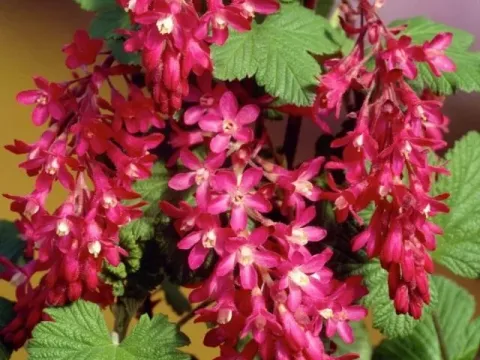
Gordon currant
Ribes gordonianum
The Gordon currant (Ribes gordonianum) is a distinct hybrid resulting from a cross between Ribes sanguineum and Ribes aureum. It belongs to the Grossulariaceae family and is widely appreciated as an ornamental shrub in temperate gardens.
What the section contains
Gordon currant
This species thrives best in locations that provide full sun to partial shade. It is not overly demanding regarding soil type, but it performs optimally in well-drained, fertile soil that maintains consistent moisture levels throughout the growing season.
Climate adaptability is one of the key features of this shrub, as it can withstand various temperature fluctuations. However, in regions prone to heavy frost, providing a layer of organic mulch around the base of the plant is recommended to protect the root zone.
Cultivation practices involve regular irrigation during prolonged dry spells to ensure the shrub maintains its decorative foliage density. Applying a balanced fertilizer in the early spring encourages vigorous growth and promotes a more profuse flowering period.
Pruning is essential for maintaining the shape and health of the plant. It is best to perform this task immediately after the blossoms fade, removing old or crossing branches to allow light and air to penetrate the center of the shrub.
The Gordon currant is susceptible to various fungal pathogens, with powdery mildew being the most common issue observed during periods of high humidity and stagnant air.
Anthracnose may also affect the foliage, causing premature leaf drop which can significantly impact the visual appeal of the shrub during the late summer months.
Among insect pests, aphids are frequently observed, particularly on young shoot tips, causing stunted growth and distorted leaf development if left unmanaged.
Spider mites can also become a problem in exceptionally hot and dry conditions, necessitating periodic monitoring and, if needed, application of horticultural oils or soaps.
Effective management strategies include keeping the area beneath the shrub clear of debris and ensuring proper spacing between plants to maximize airflow, which naturally reduces the pressure from fungal diseases.