
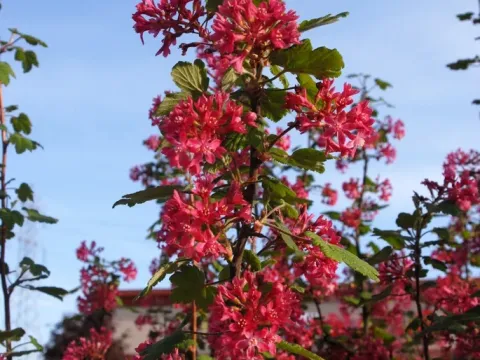
Sticky currant
Ribes glutinosum
Sticky currant (Ribes glutinosum) is a deciduous shrub belonging to the Grossulariaceae family. Native to the coastal regions of California, this species is well-known for its sticky, aromatic foliage and attractive flower clusters.
What the section contains
Sticky currant
The plant thrives in well-draining, nutrient-rich soil with a neutral to slightly acidic pH. It prefers partially shaded environments, as direct sunlight can be harsh and may cause the glandular hairs on the leaves to dry out prematurely.
Botanically, Ribes glutinosum is characterized by its glandular trichomes that secrete a resinous, sticky substance. This feature serves as a protective mechanism against evaporation and some herbivores in its natural Mediterranean-like habitat.
In terms of climate requirements, this shrub prefers mild winters and dry summers. It is not cold-hardy in severe northern climates and often requires shelter or a controlled environment to survive freezing temperatures during the winter season.
Agricultural management includes consistent irrigation during the growing phase to establish a deep root system. Pruning should be performed during the dormant season to remove dead wood and encourage vigorous new growth for the upcoming year.
The most common disease affecting Sticky currant is powdery mildew. This fungal issue thrives in stagnant air and high humidity, appearing as a white powdery coating on the surfaces of the leaves and stems.
Pests such as aphids and spider mites are frequent invaders of this species. These pests often congregate on the underside of leaves, and their feeding activity can cause yellowing, leaf curling, and stunted growth if left unmanaged.
Anthracnose can also impact the health of the foliage, resulting in necrotic spots. Implementing a rigorous sanitation program, such as removing fallen leaves in autumn, significantly lowers the overwintering population of these pathogens.
Root rot is a critical threat that usually stems from poor drainage or overwatering. Ensuring that the soil structure is loose and porous is essential for long-term health and disease prevention in this woody plant.
Integrated Pest Management (IPM) practices, including the encouragement of beneficial insects like ladybugs, can naturally suppress aphid populations. Maintaining a balanced ecosystem within the garden is the most sustainable approach to protection.