
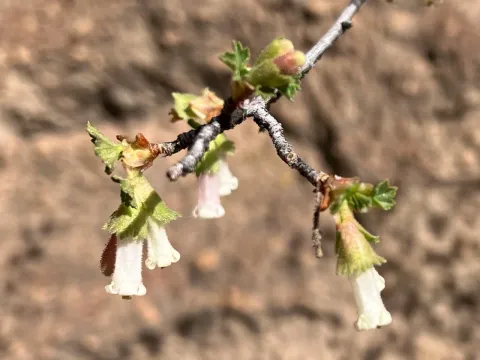
Wax currant
Ribes cereum
Wax currant (Ribes cereum) is a deciduous shrub belonging to the Grossulariaceae family. Native to the western parts of North America, this species is well-adapted to mountainous regions and dry, rocky slopes where other moisture-loving currants would struggle to survive.
What the section contains
Wax currant
The botanical identity of this plant is defined by its rounded, lobed leaves that often feature a distinct, waxy appearance. This waxy coating serves as a critical evolutionary adaptation, significantly reducing transpiration and allowing the plant to thrive in arid conditions.
Regarding soil and site requirements, Wax currant performs best in well-drained, sandy, or rocky soils. It is highly intolerant of waterlogged conditions, which can lead to root rot and overall plant decline, making drainage a priority for any cultivation effort.
In terms of climate, the species is remarkably cold-hardy, capable of withstanding the harsh winters characteristic of its native high-altitude habitats. It excels in full sun exposure, which is necessary for maintaining its compact habit and encouraging proper flowering.
Economically, while the small, dry berries are technically edible, they are typically not harvested for commercial production due to their flavor profile. Instead, the plant is primarily valued for its ornamental role in xeriscaping and as a sturdy component of native plant gardens.
Wax currant exhibits a high degree of natural resistance to the most common pests and diseases that affect commercial currant varieties. Its robust physiological makeup provides a strong defense against many traditional berry shrub pathogens.
The primary concern for growers in humid environments is powdery mildew. This fungal issue is usually a result of poor air circulation within the shrub canopy rather than a susceptibility of the plant species itself.
Insect pests like aphids or scale insects rarely cause significant damage to Ribes cereum. The foliage's texture and potential chemical compounds likely act as a deterrent to many common garden pests found in temperate regions.
Effective management strategies rely on preventative maintenance rather than chemical intervention. Providing adequate space between shrubs and performing routine pruning are the most effective ways to ensure the health of the plant.
Sanitation is key to preventing the spread of diseases. Removing any dead or overcrowded stems during the dormant season helps maintain the vigor of the plant and keeps the shrub canopy open to sunlight and airflow.