
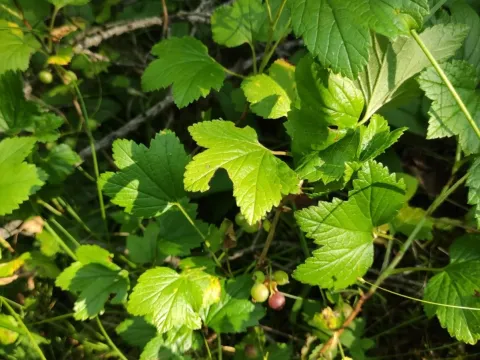
Ribes procumbens
Ribes procumbens
Ribes procumbens, commonly known as the trailing currant, is a unique plant species belonging to the Grossulariaceae family. Unlike common garden currants, this plant is characterized by its prostrate growth habit, where stems lie along the ground and can root at the nodes, forming a dense vegetative mat.
What the section contains
Ribes procumbens
The native range of this species is located in the Far East, specifically in parts of Russia, China, and Japan. It naturally thrives in cool, moist forest environments, often found under the canopy of coniferous or mixed forests, which indicates its preference for moderate shade and stable environmental conditions.
In terms of soil requirements, this currant species demands high organic content and consistent moisture. It performs best in well-drained, fertile, and slightly acidic soils. Growers should ensure that the planting site has good water retention capacity, as the shallow root system is sensitive to drought.
The climate requirements for Ribes procumbens include a need for cold winters and temperate summers. It is exceptionally winter-hardy and is well-adapted to regions where prolonged snow cover provides essential insulation, protecting the low-lying stems from extreme freezing temperatures.
Proper horticultural care involves maintaining a layer of mulch around the plants to conserve soil moisture and suppress competition from weeds. Since the plant is naturally adapted to forest floors, it does not require significant pruning unless to remove damaged or diseased wood after the dormant season.
The economic potential of Ribes procumbens is centered on its small, flavorful berries, which are highly valued for their nutritional profile. They are rich in vitamins, particularly vitamin C, and potent antioxidants, making them suitable for specialized health food production and artisanal jam processing.
Beyond berry production, Ribes procumbens serves as an important genetic resource for breeders looking to incorporate winter hardiness into commercial currant varieties. Its unique growth habit also makes it a potential candidate for ornamental groundcover in specialized northern forest gardens.
The primary threats to the health of Ribes procumbens are fungal infections like leaf spot and anthracnose, which are exacerbated by high humidity and poor air circulation within the shrub. Implementing a strategy of spacing and keeping the area free of excess moisture helps mitigate these risks.
Insect pests, including aphids and leaf-feeding larvae, can occasionally damage the foliage. Biological control agents or targeted, mild insecticide applications are recommended if infestation levels exceed economic thresholds, particularly during the early stages of the growing season.
Harvesting Ribes procumbens is a labor-intensive process due to the prostrate nature of the plant, which makes mechanical harvesting virtually impossible. Hand-picking is required, and because berries ripen unevenly, multiple passes over the planting site are necessary to capture the entire yield at peak quality.