
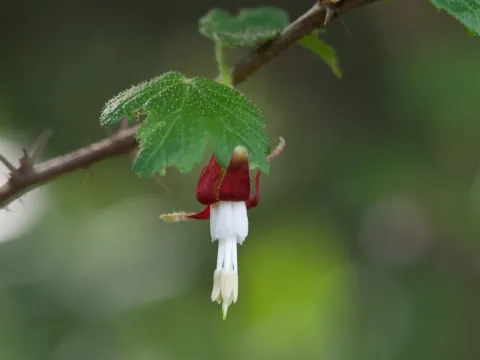
Menzies' currant
Ribes menziesii
Menzies' currant (Ribes menziesii) is a deciduous shrub species belonging to the Grossulariaceae family. Native to California, this plant is well-adapted to the coastal environment and thrives in regions with Mediterranean-like weather patterns.
What the section contains
Menzies' currant
The plant is recognized for its spiny stems and distinctive, pendulous fuchsia-like flowers that bloom in the spring. It serves as an excellent ornamental specimen for gardens focused on native or drought-tolerant plant species.
Growing requirements include well-draining soil to prevent root rot, which is a common issue for this genus. While it tolerates various soil types, it prefers slightly acidic to neutral conditions for optimal nutrient uptake.
This shrub requires a location with adequate sunlight, although partial shade is beneficial in regions with intense summer heat. Proper airflow is essential to keep the foliage dry and prevent fungal outbreaks during cooler, damp seasons.
Cultivation practices involve minimal intervention, primarily focusing on periodic pruning to remove dead or diseased branches. This helps maintain the plant's shape and encourages vigorous new growth each season.
Powdery mildew represents a primary threat to Menzies' currant, often appearing when humidity levels are high and air circulation is insufficient. Improving ventilation is the best preventive strategy.
Rust diseases can also affect the foliage, resulting in characteristic spots that may reduce the overall health and visual appeal of the shrub. Infected leaves should be collected and disposed of promptly.
Aphids often target tender shoots in the early spring, causing stunted growth and leaf curling. Regular monitoring allows gardeners to intervene early, often with water sprays or mild soaps.
Scale insects can occasionally infest the woody parts of the plant. A close inspection of stems is recommended to detect these pests before they reach a population level that threatens the shrub.
Maintaining a healthy environment through proper spacing and moisture management is the most effective way to keep the plant resistant to typical pests and diseases throughout the growing cycle.