
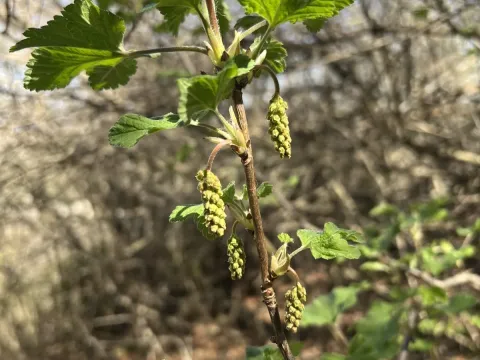
Many-flowered currant
Ribes multiflorum
The many-flowered currant (Ribes multiflorum) is a deciduous shrub belonging to the Grossulariaceae family. Its natural distribution is primarily centered in the mountainous regions of Central and Southern Europe, where it thrives in cool, elevated environments.
What the section contains
Many-flowered currant
This species requires well-drained, nutrient-rich soils to achieve optimal vegetative growth and berry production. It is relatively tolerant of shade but prefers partial sun exposure to ensure the proper development of its characteristic long, pendulous flower racemes.
Botanically, it is distinguished by its inflorescences, which carry a large number of small, greenish-yellow flowers. These racemes can reach lengths of up to 15 cm, making the shrub visually striking during the late spring flowering period.
In terms of agricultural management, regular pruning is essential to maintain plant vigor and encourage the production of younger, more productive shoots. The plant is hardy but benefits from mulching to stabilize soil temperatures during the winter months.
While often cultivated as an ornamental or a genetic source for hybridization, it produces edible red berries that possess a distinct flavor profile, contributing to its potential value in niche berry production markets.
The plant is susceptible to common currant diseases such as anthracnose and powdery mildew, particularly in environments with poor air circulation or excessive moisture levels during the peak growing season.
Common insect pests include aphids and currant borers, which can severely stress the plant by feeding on sap or boring into the stems, leading to stunted growth or branch dieback if left untreated.
Integrated Pest Management (IPM) strategies are recommended, focusing on maintaining plant health through correct spacing, sanitation, and the use of targeted control agents only when economic thresholds are reached.
Removing dead or diseased branches during winter dormancy is a critical preventative measure, as it reduces the potential overwintering sites for fungal spores and insect larvae.
Monitoring for signs of leaf discoloration or distorted growth is vital, as early detection allows for effective intervention with minimal use of chemical inputs, thereby maintaining the environmental sustainability of the site.